Research draft — full chapter unapproved. Only the specifically cited claim or USDA panel below has a limited check; older research notes remain unverified. Do not use this chapter as foraging, preservation, or medical guidance. A checked claim applies only to its cited wording.
Book readiness · Identity 07
Food identity and publication boundary
Canonical identity
White button mushroom, raw; heading requires spelling correction
Scientific identity
Agaricus bisporus (J.E.Lange) Imbach.
Edible part
Cultivated immature fruiting body, cap and stem.
Source form
Mushrooms, white, raw, corresponding to USDA FoodData Central FDC 169251.
Do not merge with
Wild Agaricus, cremini or portobello maturity stages, cooked, canned or dried mushrooms, powders, extracts, supplements, and unidentified fungi.
Safety boundary
The heading should say White Button Mushroom. A grocery mushroom panel is never wild-mushroom identification or clearance; toxic look-alikes can cause severe illness or death.
Publication decision
Identity and raw cultivated form defined; rename the page to White Button Mushroom and keep all wild identification held.
White button mushroom, raw; heading requires spelling correction
Scientific identity
Agaricus bisporus (J.E.Lange) Imbach.
Edible part
Cultivated immature fruiting body, cap and stem.
Exact source form
Mushrooms, white, raw, corresponding to USDA FoodData Central FDC 169251.
Authoritative control
The queue name is not a standard identity and must be confirmed from a label or specimen. For confirmed Agaricus bisporus, peer-reviewed research found household processing and cooking substantially reduced agaritine exposure, while also noting unresolved biological significance. FDA produce guidance supports rinsing under running water rather than using soap.
What the human evidence supports
If the intended food is cultivated white button mushroom, a brief rinse or wipe is a quality choice and peeling is generally unnecessary; drying before browning addresses surface water. Cooking reduces agaritine exposure, but the evidence does not establish that a raw serving causes human disease. No conclusion transfers to wild or unidentified mushrooms.
Remove or qualify
Do not merge this chapter with: Wild Agaricus, cremini or portobello maturity stages, cooked, canned or dried mushrooms, powders, extracts, supplements, and unidentified fungi. Remove or qualify medical-treatment, universal-safety, cross-species, cross-part, cross-product, and cross-preparation claims unless an exact source is reviewed for that wording.
Safety boundary
The heading should say White Button Mushroom. A grocery mushroom panel is never wild-mushroom identification or clearance; toxic look-alikes can cause severe illness or death.
Limitations and unresolved variables
Do not eat a mushroom identified only as “white bottom,” by color, or from a photograph; confirm cultivated Agaricus bisporus and source. Discard slimy, moldy or strongly off-odor mushrooms. Never use soaking, peeling or cooking as a rescue for an unidentified wild mushroom.
Publication decision
Bounded fact set is ready for controlled chapter rewrite; the legacy chapter and its broader claims remain unapproved.
Legacy narrative status
No legacy narrative sentence is approved by this fact-set decision. It must be rewritten from, or checked individually against, the bounded facts and exact sources recorded here.
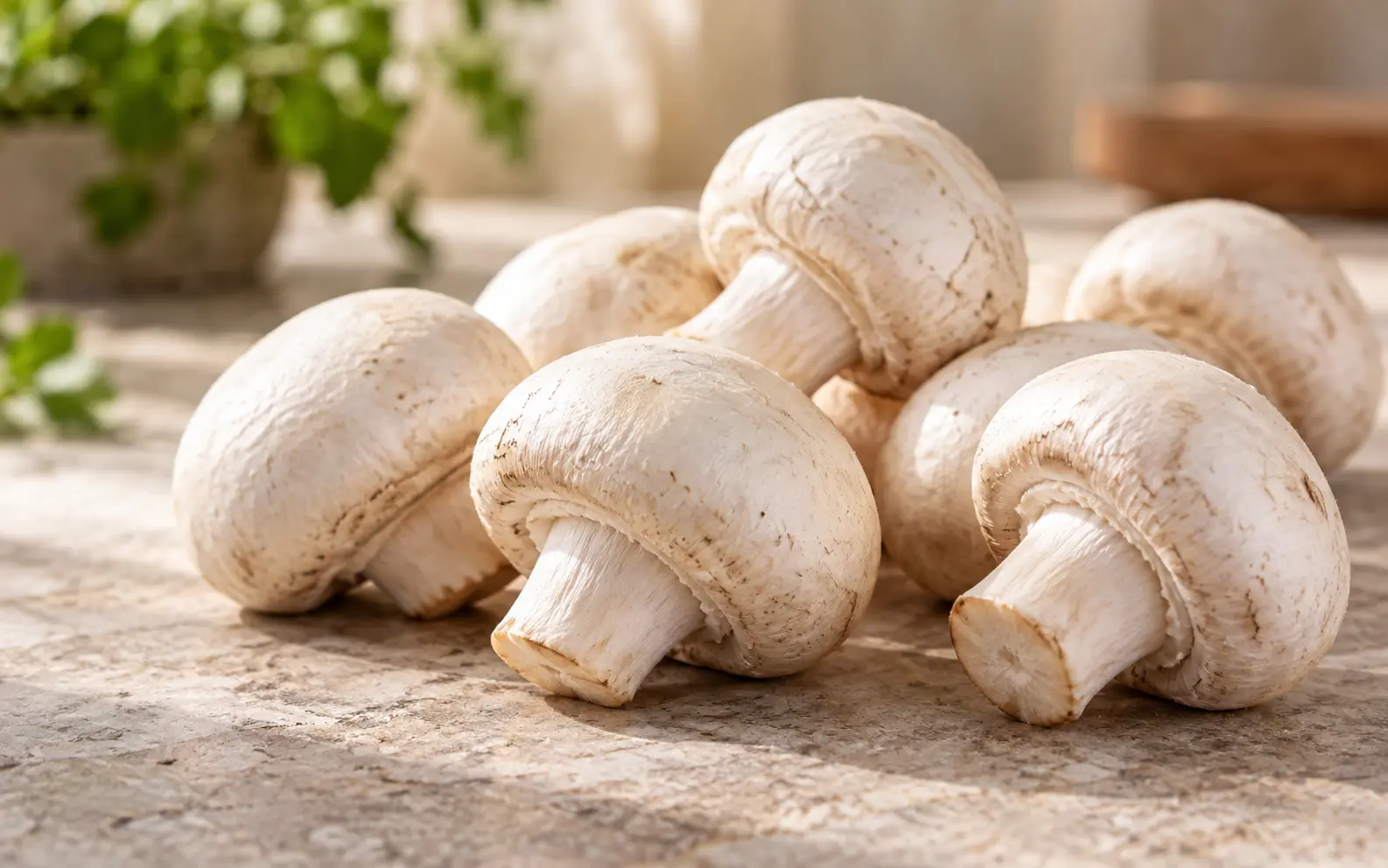
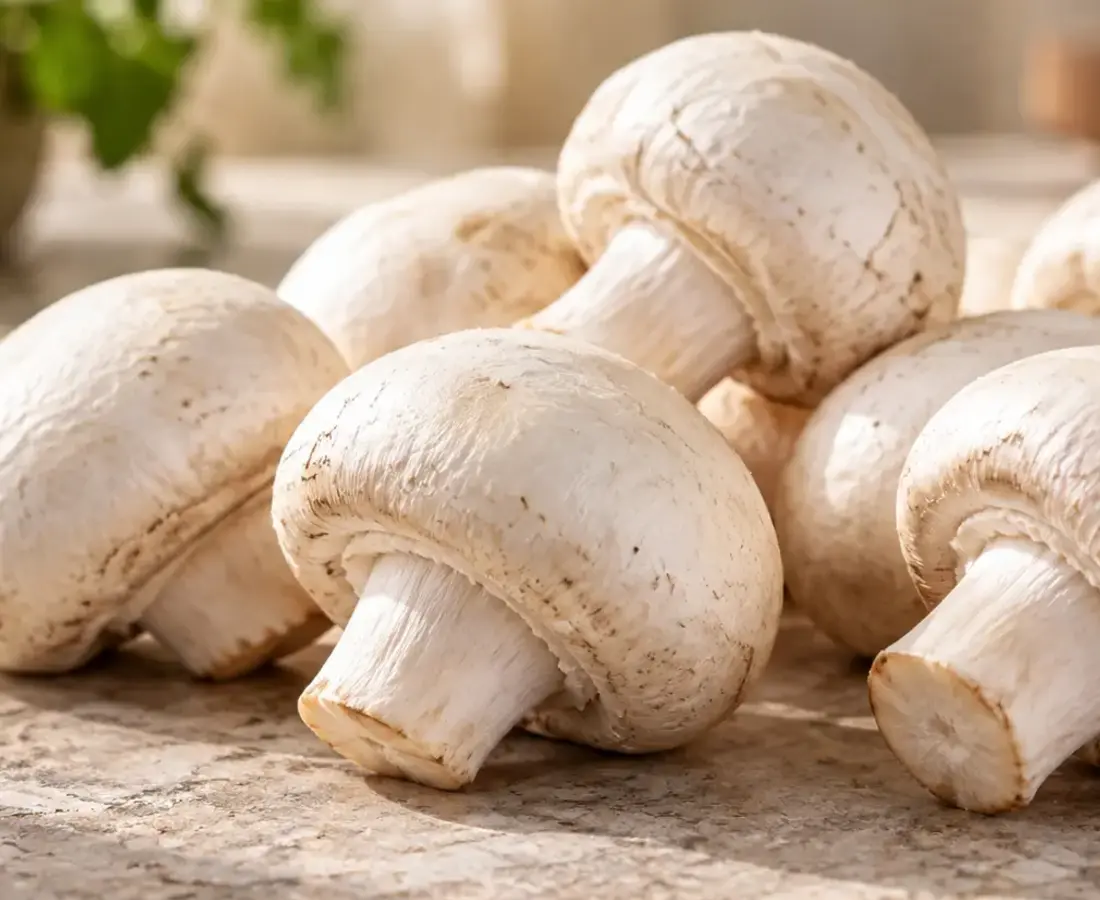
Editorial portraitWhite Button Mushroom: image must match the chapter’s stated edible part and source form.Edible-form detailWhite Button Mushroom: close editorial detail of the chapter’s stated edible form.
Editorial boundary: These AI-generated orientation images must not be used to identify wild foods, judge edibility, prove safe preparation, or diagnose spoilage. The verified safety-image panel and written guidance control where present.
Book readiness · Rewrite 05
Controlled chapter rewrite
What this entry covers
White button mushroom, raw; heading requires spelling correction. Scientific identity: Agaricus bisporus (J.E.Lange) Imbach. Edible part: Cultivated immature fruiting body, cap and stem. Exact source form: Mushrooms, white, raw, corresponding to USDA FoodData Central FDC 169251.
The human question and observed experience
Question: Does “White Bottom Mushroom” mean white button mushroom, and if so should it be washed, peeled or cooked rather than eaten raw?
Repeated experience: Independent cooking discussions about white button mushrooms repeatedly disagree between brushing, wiping and quick rinsing; many say peeling is unnecessary, while some fear water makes mushrooms soggy. Their experience concerns cultivated Agaricus bisporus and cannot confirm that the queue phrase “White Bottom Mushroom” names the same organism.
Authoritative control
The queue name is not a standard identity and must be confirmed from a label or specimen. For confirmed Agaricus bisporus, peer-reviewed research found household processing and cooking substantially reduced agaritine exposure, while also noting unresolved biological significance. FDA produce guidance supports rinsing under running water rather than using soap.
What the combined evidence supports
If the intended food is cultivated white button mushroom, a brief rinse or wipe is a quality choice and peeling is generally unnecessary; drying before browning addresses surface water. Cooking reduces agaritine exposure, but the evidence does not establish that a raw serving causes human disease. No conclusion transfers to wild or unidentified mushrooms.
Safety and limitations. The heading should say White Button Mushroom. A grocery mushroom panel is never wild-mushroom identification or clearance; toxic look-alikes can cause severe illness or death. Do not eat a mushroom identified only as “white bottom,” by color, or from a photograph; confirm cultivated Agaricus bisporus and source. Discard slimy, moldy or strongly off-odor mushrooms. Never use soaking, peeling or cooking as a rescue for an unidentified wild mushroom.
Exclude or qualify: Do not merge this chapter with: Wild Agaricus, cremini or portobello maturity stages, cooked, canned or dried mushrooms, powders, extracts, supplements, and unidentified fungi. Remove or qualify medical-treatment, universal-safety, cross-species, cross-part, cross-product, and cross-preparation claims unless an exact source is reviewed for that wording.
Review status: This controlled rewrite uses the adjudicated identity, food-form, human-experience, authoritative-control, conclusion, and safety fields. It replaces broader legacy prose for this chapter layer but does not constitute final specialist or publication approval.
Verified human-taken photographs
Safety image guide
These cleared reference photographs support the written safety guidance. They do not prove that a wild specimen is edible, that a preparation is safe, or that spoiled food can be rescued.
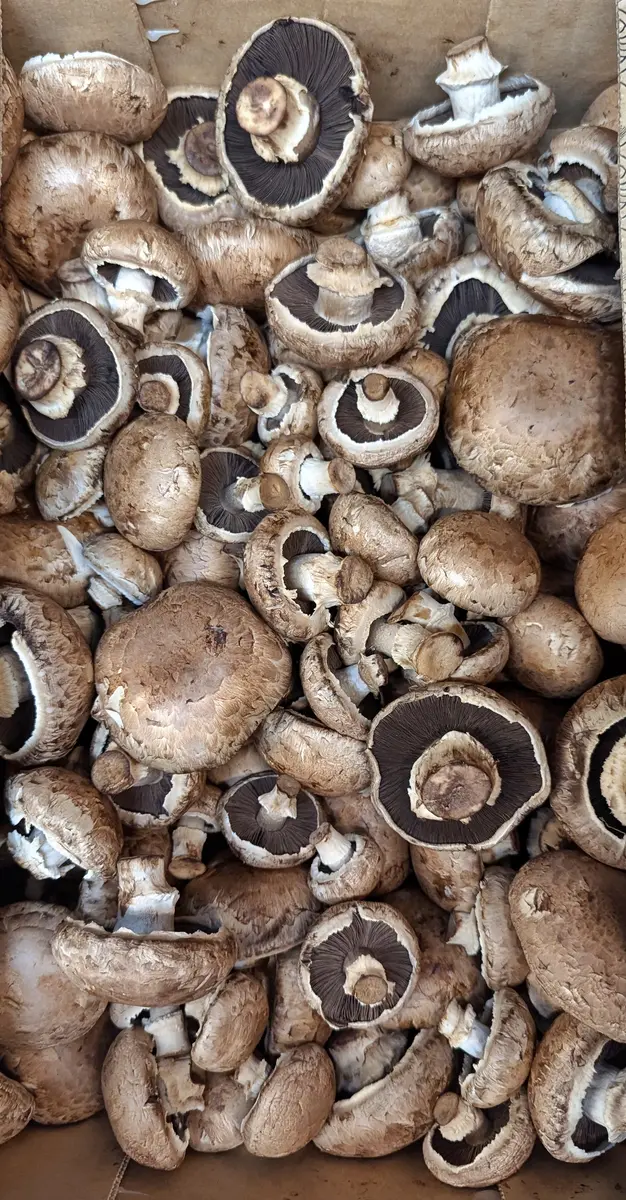
Preparation reference
Cultivated button mushrooms
Button MushroomsButton mushrooms - Wellington, New Zealand.jpg · Daderot CC0 1.0 Universal Public Domain Dedication · source and license
Use boundary: Use with the written safety instruction; the photograph does not prove safe preparation or toxin removal.
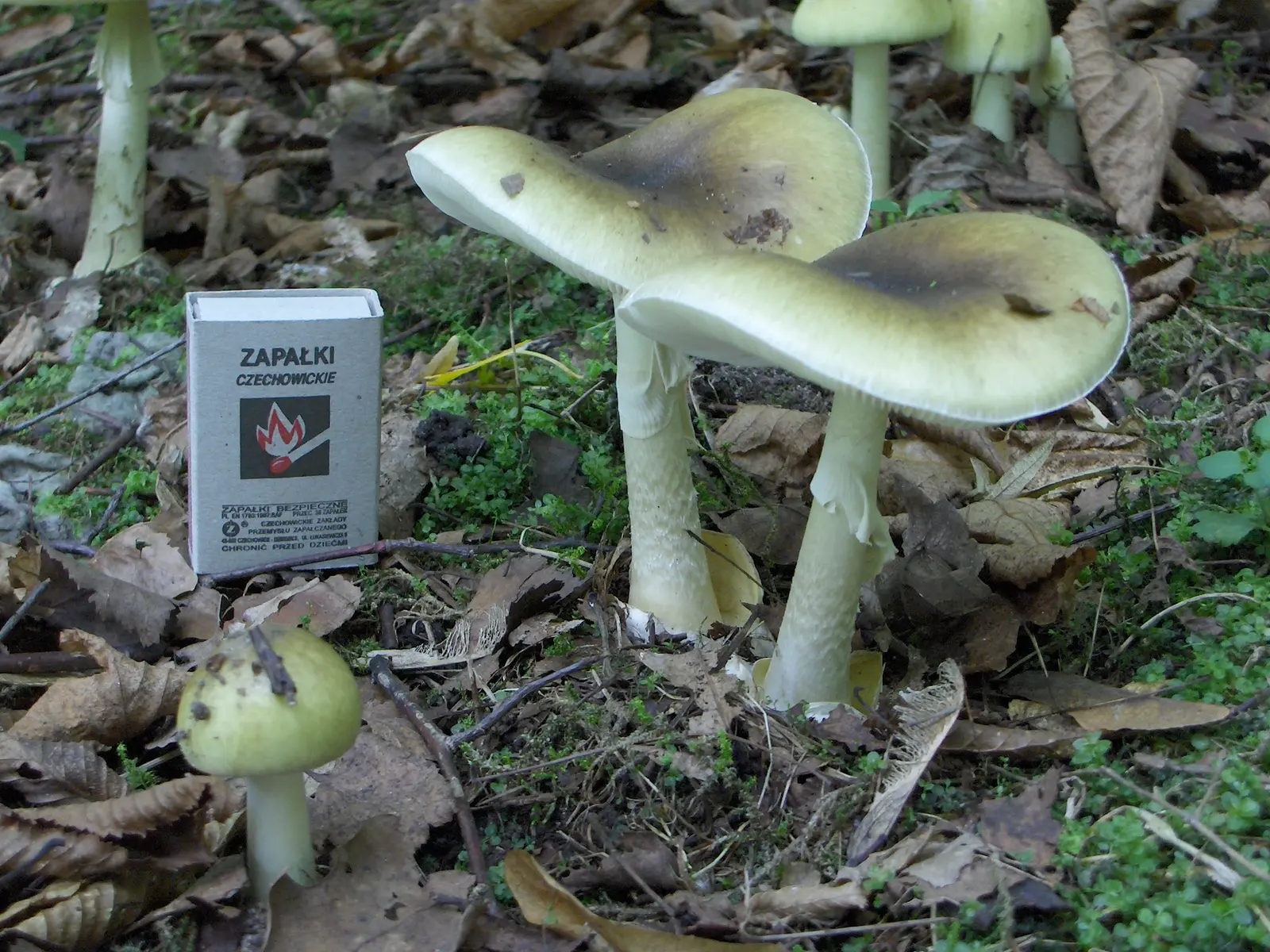
Identification reference
Cultivated button mushroom versus death cap
Button MushroomsButton mushrooms - Wellington, New Zealand.jpg · Daderot CC0 1.0 Universal Public Domain Dedication · source and licenseDeath CapAmanita phalloides adult.jpg · Ss181292 Public domain · source and license
Use boundary: Reference only. Do not identify wild food, toxicity, or edibility from a photograph alone.
Status: Approved for book assembly with required safety box
Approved for informational book assembly only with the authoritative safety-and-limitations box retained beside the chapter text.
Specialist-review flags: None
Safety-box triggers: look-alike, toxic, wild
Final gate checks
Passed: controlled rewrite complete
Passed: five claim layers present
Passed: every claim layer has sources
Passed: human experience separated
Passed: authoritative control present
Passed: supported conclusion present
Passed: safety and limitations present
Passed: legacy prose excluded
Review scope: Final source-completeness, structure, exclusion, and risk-triage review for book assembly. This is not a claim that an external specialist reviewed the chapter.
Recorded checks and sources7 displayed nutrient values checked against the exact USDA FDC record and food form.7 narrative statements source-linked; independent support review pending.Batch 10 · reviewed Oct. 8, 2026 · numeric transcription check; full chapter unapproved.
Corrected USDA food/form panel · other claims unreviewed
Mushrooms, white, raw
raw white button mushrooms, not UV-exposed. Other chapter claims unverified. The earlier mismatched or broader nutrient assignment is not used here. This panel describes only the named food and preparation, not every food sold under the glossary heading. A nutrient record does not establish raw-consumption safety.
Mushroom identification boundary
This page does not establish that a wild mushroom is edible. CDC guidance reports that wild mushrooms should not be consumed unless identified by an expert; a cultivated or retail mushroom record is a different food-safety context from a foraged specimen.
USDA FoodData Central FDC 169251 · SR Legacy (final release, April 2018). Values describe only this named form, not all products or varieties.
Human experience evidence · Batch 19
What people experience—and what the evidence supports
Evidence mapped
Question: Does “White Bottom Mushroom” mean white button mushroom, and if so should it be washed, peeled or cooked rather than eaten raw?
Repeated human experience
Independent cooking discussions about white button mushrooms repeatedly disagree between brushing, wiping and quick rinsing; many say peeling is unnecessary, while some fear water makes mushrooms soggy. Their experience concerns cultivated Agaricus bisporus and cannot confirm that the queue phrase “White Bottom Mushroom” names the same organism.
Authoritative explanation or control
The queue name is not a standard identity and must be confirmed from a label or specimen. For confirmed Agaricus bisporus, peer-reviewed research found household processing and cooking substantially reduced agaritine exposure, while also noting unresolved biological significance. FDA produce guidance supports rinsing under running water rather than using soap.
What the evidence supports
If the intended food is cultivated white button mushroom, a brief rinse or wipe is a quality choice and peeling is generally unnecessary; drying before browning addresses surface water. Cooking reduces agaritine exposure, but the evidence does not establish that a raw serving causes human disease. No conclusion transfers to wild or unidentified mushrooms.
Limitations and safety boundary
Do not eat a mushroom identified only as “white bottom,” by color, or from a photograph; confirm cultivated Agaricus bisporus and source. Discard slimy, moldy or strongly off-odor mushrooms. Never use soaking, peeling or cooking as a rescue for an unidentified wild mushroom.
Open evidence records and sources
Human experience / Q&A
Independent public discussion threads
Finding: Independent cooking discussions about white button mushrooms repeatedly disagree between brushing, wiping and quick rinsing; many say peeling is unnecessary, while some fear water makes mushrooms soggy. Their experience concerns cultivated Agaricus bisporus and cannot confirm that the queue phrase “White Bottom Mushroom” names the same organism.
Supported conclusion: If the intended food is cultivated white button mushroom, a brief rinse or wipe is a quality choice and peeling is generally unnecessary; drying before browning addresses surface water. Cooking reduces agaritine exposure, but the evidence does not establish that a raw serving causes human disease. No conclusion transfers to wild or unidentified mushrooms.
Limitations: The primary limitation is unresolved identity. Human discussions and the agaritine study concern A. bisporus only. Long-term human risk from typical raw intake is not resolved by the processing study.
Evidence strength: Low: uncontrolled, self-selected reports; repetition is experiential only
Safety/current gate: Do not eat a mushroom identified only as “white bottom,” by color, or from a photograph; confirm cultivated Agaricus bisporus and source. Discard slimy, moldy or strongly off-odor mushrooms. Never use soaking, peeling or cooking as a rescue for an unidentified wild mushroom.
Peer-reviewed processing study plus FDA produce-washing guidance
Finding: The queue name is not a standard identity and must be confirmed from a label or specimen. For confirmed Agaricus bisporus, peer-reviewed research found household processing and cooking substantially reduced agaritine exposure, while also noting unresolved biological significance. FDA produce guidance supports rinsing under running water rather than using soap.
Supported conclusion: If the intended food is cultivated white button mushroom, a brief rinse or wipe is a quality choice and peeling is generally unnecessary; drying before browning addresses surface water. Cooking reduces agaritine exposure, but the evidence does not establish that a raw serving causes human disease. No conclusion transfers to wild or unidentified mushrooms.
Limitations: The primary limitation is unresolved identity. Human discussions and the agaritine study concern A. bisporus only. Long-term human risk from typical raw intake is not resolved by the processing study.
Evidence strength: Peer-reviewed processing study plus FDA produce-washing guidance; applicability limited to the stated food identity, form and population
Safety/current gate: Do not eat a mushroom identified only as “white bottom,” by color, or from a photograph; confirm cultivated Agaricus bisporus and source. Discard slimy, moldy or strongly off-odor mushrooms. Never use soaking, peeling or cooking as a rescue for an unidentified wild mushroom.