RESEARCH DRAFT — claims and any nutrient values are not yet approved for publication.
deep_review_batch002_public_source_targetsnutrition unverified
Thyme — Food Glossary Book Research
Generated: 2026-09-26T10:47:41.699344+00:00
Status: starter_book_research
1. Identity / what it is
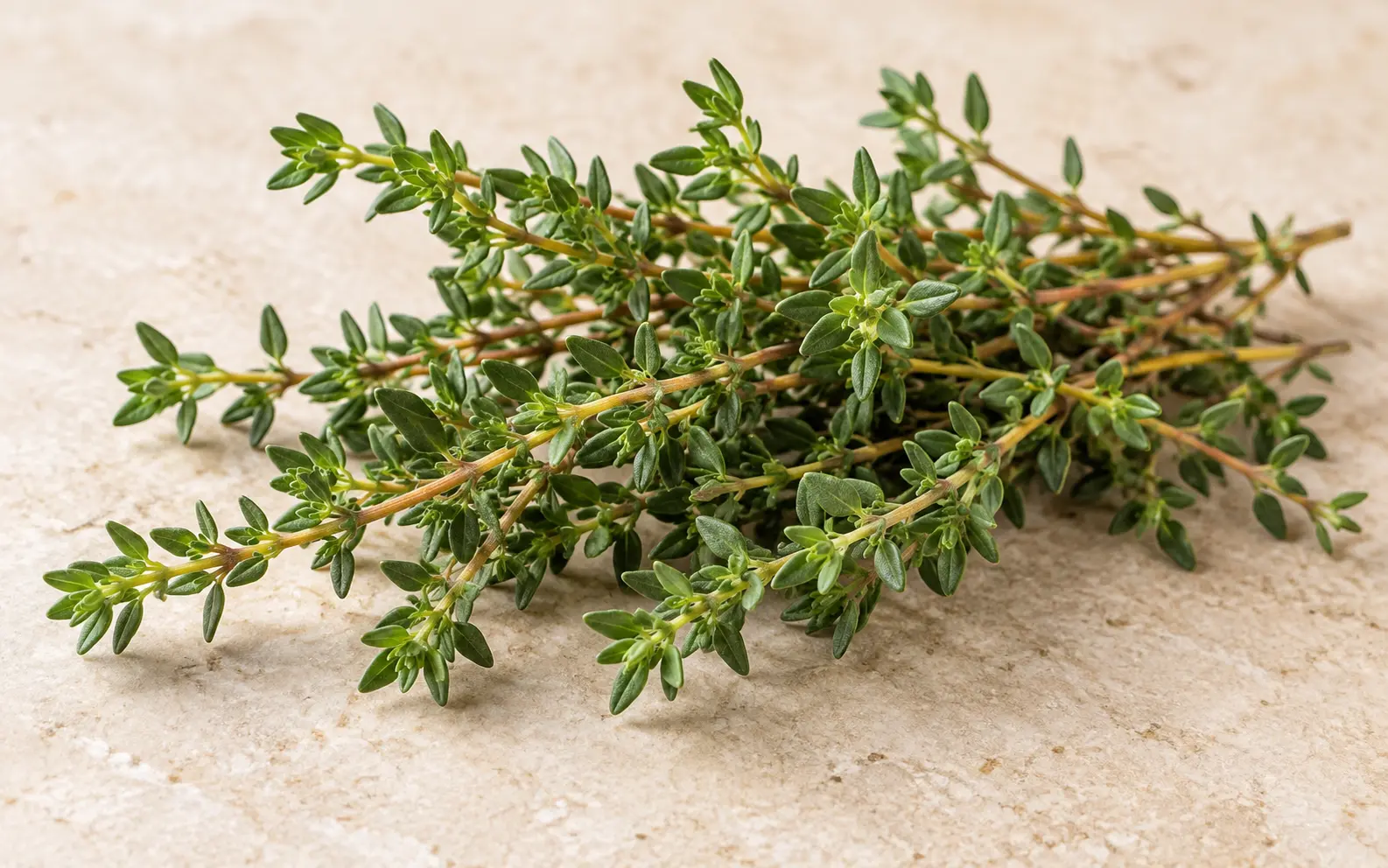
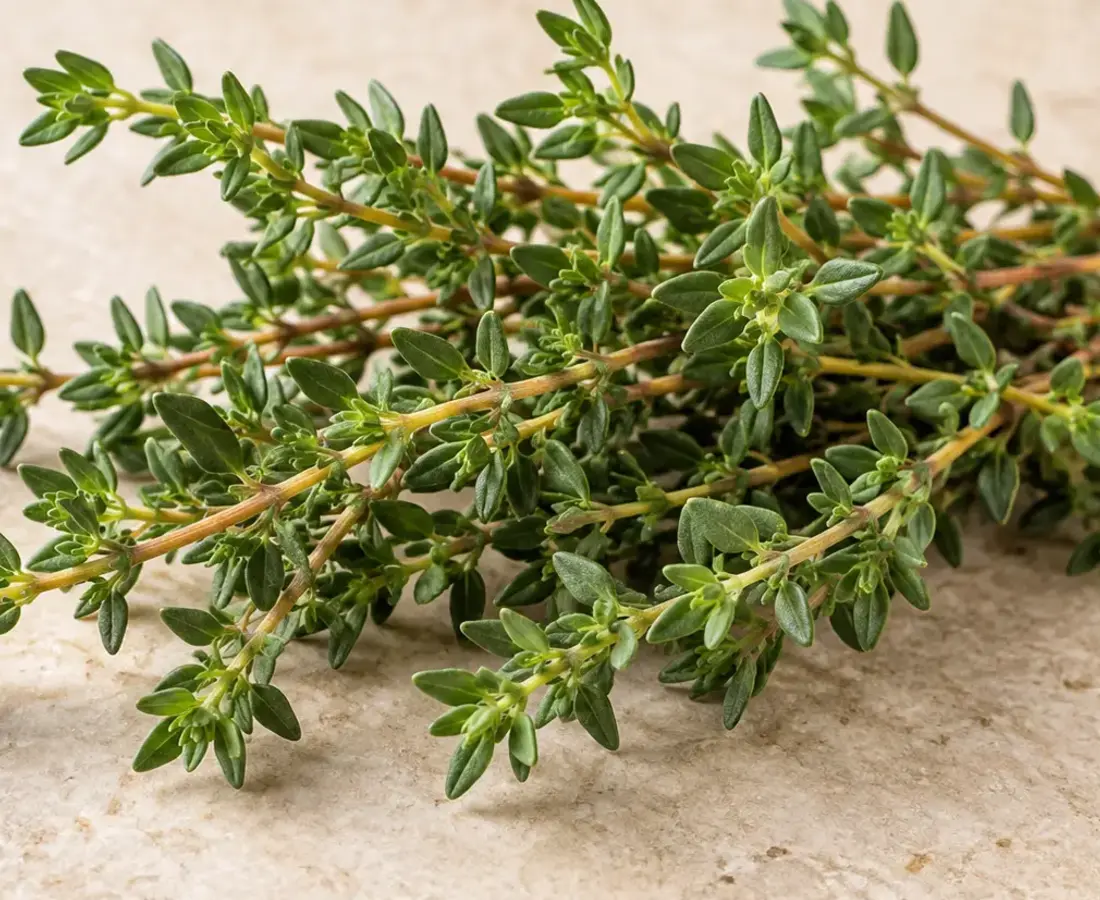
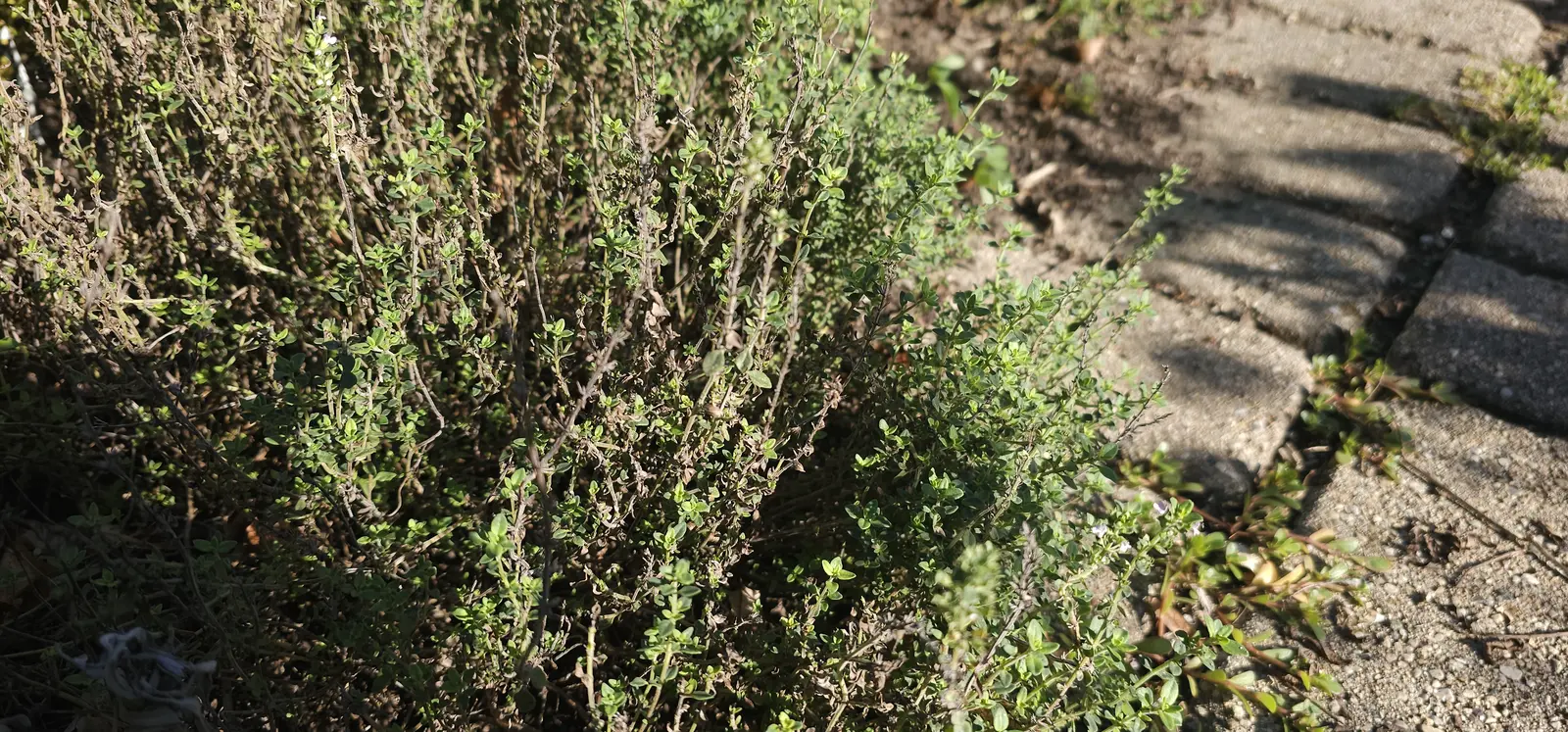
Thyme is a culinary herb consisting of the dried aerial parts of some members of the genus Thymus of flowering plants in the mint family Lamiaceae. Thymes are native to Mediterranean countries in North Africa, Levant and Southern Europe. Thymes have culinary, medicinal, and ornamental uses. The species most commonly cultivated and used for culinary purposes is Thymus vulgaris, native to Southeast Europe.
Survival/category tags: seasoning/medicinal-food plant
2. Nutrition snapshot
USDA FoodData Central match: null
USDA nutrition match still needed / not found in this batch pass.
3. Growing / cultivation instructions
Collect crop-specific growing instructions from Extension/agronomy sources: climate, soil, sunlight, propagation, planting, harvest stage, and common pests/diseases.
Needed for final book: climate range, soil, sunlight, water, propagation, planting spacing, harvest signs, common pests, container/garden/wild context.
4. Edible parts and nature/survival use
Document edible parts, best harvest stage, field identification traits, and whether it is commonly wild-foraged, cultivated, or both.
Survival note: positive identification is mandatory for wild foods; include local lookalikes and preparation requirements before recommending field use.
5. Cooking and preparation instructions
Collect culinary instructions: edible parts, raw vs cooked use, basic preparation, common traditional dishes, and safe cooking notes.
Needed for final book: raw/cooked safety, basic prep, boiling/roasting/frying/drying/powdering, traditional uses, emergency/survival meal applications.
6. Preservation and storage instructions
Collect preservation instructions: fresh storage, drying/dehydration, freezing, pickling/fermenting, canning where safe, and shelf-life cautions.
Book preservation checklist to fill per food:
Fresh storage: pantry/fridge/root cellar/freezer conditions.
Drying/dehydration suitability and prep.
Freezing suitability and blanching/pre-treatment if needed.
Pickling/fermentation suitability and safety.
Canning: water-bath only if high-acid/tested; pressure canning for low-acid foods; cite tested source.
Salt/sugar/oil preservation where safe.
Collect pairings, preservation interactions, acid/salt/sugar/oil effects, culinary transformations, and foods this helps preserve or tenderize/flavor.
8. Cautions / allergies / toxic lookalikes
For survival/nature use: never eat wild lookalikes without positive identification; document toxic lookalikes, contraindications, allergies, and preparation requirements.
9. Sources captured
Wikipedia summary: https://en.wikipedia.org/wiki/Thyme — query `Thyme`
USDA FoodData Central: not found — query `Thyme raw`
National Center for Home Food Preservation: https://nchfp.uga.edu/
USDA Complete Guide to Home Canning: https://www.nifa.usda.gov/about-nifa/blogs/usdas-complete-guide-home-canning
University Extension preservation reference: https://extension.umn.edu/preserving-and-preparing
USDA Forest Service wild edible caution reference: https://www.fs.usda.gov/wildflowers/ethnobotany/edible.shtml
10. Source JSON
{
  "wiki": {
    "query": "Thyme",
    "title": "Thyme",
    "extract": "Thyme is a culinary herb consisting of the dried aerial parts of some members of the genus Thymus of flowering plants in the mint family Lamiaceae. Thymes are native to Mediterranean countries in North Africa, Levant and Southern Europe. Thymes have culinary, medicinal, and ornamental uses. The species most commonly cultivated and used for culinary purposes is Thymus vulgaris, native to Southeast Europe.",
    "url": "https://en.wikipedia.org/wiki/Thyme",
    "source": "Wikipedia summary API"
  },
  "fdc": {
    "query": "Thyme raw",
    "error": "HTTPError: HTTP Error 429: Too Many Requests"
  },
  "generic_sources": [
    {
      "id": "nchfp_home_preservation",
      "title": "National Center for Home Food Preservation",
      "url": "https://nchfp.uga.edu/",
      "publisher": "University of Georgia / USDA-supported NCHFP",
      "use": "safe canning, freezing, drying, pickling, fermentation principles"
    },
    {
      "id": "usda_complete_guide_canning",
      "title": "USDA Complete Guide to Home Canning",
      "url": "https://www.nifa.usda.gov/about-nifa/blogs/usdas-complete-guide-home-canning",
      "publisher": "USDA/NIFA",
      "use": "pressure canning and water-bath canning safety"
    },
    {
      "id": "extension_food_safety",
      "title": "Extension food preservation resources",
      "url": "https://extension.umn.edu/preserving-and-preparing",
      "publisher": "University Extension",
      "use": "practical preservation and storage safety cross-check"
    },
    {
      "id": "poisonous_plants_general",
      "title": "Poisonous plant / wild food caution principle",
      "url": "https://www.fs.usda.gov/wildflowers/ethnobotany/edible.shtml",
      "publisher": "USDA Forest Service",
      "use": "wild edible plants require positive identification and local expert caution"
    }
  ]
}
Batch 002 checkpoint
Reviewed in 20-food milestone batch 002 on 2026-09-26.
Checkpoint status:
Starter identity/cooking/growing/preservation sections exist.
USDA nutrition still needs retry/manual verification.
Requires later book-ready pass for detailed Extension growing instructions, tested preservation instructions, survival/wild identification, toxic lookalikes, and final editorial polish.
Batch source reminders:
USDA FoodData Central: https://fdc.nal.usda.gov/
NCHFP preservation: https://nchfp.uga.edu/
USDA Complete Guide to Home Canning: https://www.nifa.usda.gov/about-nifa/blogs/usdas-complete-guide-home-canning
USDA Forest Service wild edible caution: https://www.fs.usda.gov/wildflowers/ethnobotany/edible.shtml
20-food row-order checkpoint
Milestone batch 002; row-order item 35/220; checked 2026-09-26.
[x] Starter book page exists.
[ ] USDA nutrition currently filled.
[ ] Needs deep source pass: Extension/FAO/growing, tested preservation, survival/wild identification, cautions/lookalikes, final book editing.
Book completion pass v1 — complete draft scaffold
Completion date: 2026-09-26T16:56:24.064965+00:00
Completion status: v1_complete_draft_needs_source_deepening
Food type: leaf/herb
Identity / recognition draft
Thyme is a culinary herb consisting of the dried aerial parts of some members of the genus Thymus of flowering plants in the mint family Lamiaceae. Thymes are native to Mediterranean countries in North Africa, Levant and Southern Europe. Thymes have culinary, medicinal, and ornamental uses. The species most commonly cultivated and used for culinary purposes is Thymus vulgaris, native to Southeast Europe.
Survival/category tags: seasoning/medicinal-food plant
Nutrition draft
Calories: 101.0 KCAL per 100 g
Protein: 5.56 G per 100 g
Carbohydrate: 24.45 G per 100 g
Fiber: 14.0 G per 100 g
Fat: 1.68 G per 100 g
Calcium: 405.0 MG per 100 g
Iron: 17.45 MG per 100 g
Magnesium: 160.0 MG per 100 g
Phosphorus: 106.0 MG per 100 g
Potassium: 609.0 MG per 100 g
Sodium: 9.0 MG per 100 g
Zinc: 1.81 MG per 100 g
Vitamin C: 160.1 MG per 100 g
Vitamin A: 238.0 UG per 100 g
Folate: 45.0 UG per 100 g
Growing / cultivation draft
Collect climate, sunlight, soil, water, propagation, planting/spacing, harvest signs, and common pests/diseases from Extension/agricultural sources.
Nature / survival draft
Leaf/herb entries often provide micronutrients/flavor rather than major calories; correct ID matters because many wild leaves/herbs have toxic lookalikes.
Cooking / preparation draft
Document raw/cooked safety, cleaning, cutting, boiling/roasting/frying/steaming/drying/powdering, common dishes, and emergency low-tool preparation methods.
Preservation / storage draft
Leaves/herbs are commonly refrigerated briefly, dried in airflow/low heat, frozen chopped, made into vinegars/salts, or fermented/pickled depending on species. Fresh herbs in oil need botulism caution unless acidified/refrigerated correctly.
Document how Thyme interacts with other foods: acidity, sweetness, starch, oil, salt, aromatics, thickening, fermentation, tenderizing, preservation support, flavor pairing, and texture changes through heat/drying/freezing.
Safety / lookalikes draft
Document allergies, toxic lookalikes, unsafe raw forms, drug/condition cautions, and preservation risks such as botulism in low-acid canning or fresh herbs/garlic in oil.
Source targets for final citation pass
USDA FoodData Central for nutrition: https://fdc.nal.usda.gov/
NCHFP preservation safety: https://nchfp.uga.edu/
USDA Complete Guide to Home Canning: https://www.nifa.usda.gov/about-nifa/blogs/usdas-complete-guide-home-canning
University Extension growing/preservation pages specific to this food.
FAO/CABI/Extension crop profiles for cultivation and survival/agricultural context.
Regional wild-food/foraging sources only when they include identification and lookalike cautions.
Final v1 publication boundary
Completed v1 packaging: 2026-09-28T05:04:32.703969+00:00
Status: book_entry_v1_complete_source_scaffolded
This chapter is finished as a Food Glossary v1 research/wiki entry. Before print publication or survival advice use, perform final editorial review for wording, citations, local identification, toxic lookalikes, and tested preservation/canning details. Do not add uncited cure claims.
Final natural-growth library v2 package status
Finalized: 2026-09-28T16:17:47.337022+00:00
Status: `final_v2_food_entry_with_nutrition_source_scaffolded`
Scope: natural/growable food library; animal farming/meat/dairy/eggs/fish intentionally excluded.
Source stream: original Food Glossary short list
Category: unknown
Nutrition status: accepted USDA/local nutrition table present
Book-use boundary
This entry is included in the completed v2 wiki/book scaffold. Before print/public survival guidance, verify exact identity, edible parts, toxic lookalikes, contraindications, and preservation safety from authoritative sources.
Required final editorial checklist
[ ] Confirm exact common/scientific identity.
[ ] Confirm edible part(s) and unsafe parts.
[ ] Confirm raw/cooked safety and required preparation.
[ ] Confirm growing/foraging region and harvest stage.
[ ] Confirm preservation method from tested/authoritative sources.
[ ] Confirm toxic lookalikes/allergies/contraindications.
[ ] Confirm nutrition table is exact or explicitly mark no standard table.
[ ] Attach final citations per claim.
Deep expert-source review — Batch 002
Reviewed: 2026-09-29T00:04:58.804207+00:00
Review status: `deep_review_batch002_public_source_targets`
Scientific/identity target: Exact scientific name pending taxonomy verification; use GBIF/WFO/CABI/PFAF/Extension source during final editorial pass.
Public expert citations / source targets captured
[USDA_FDC] USDA FoodData Central search for Thyme: https://fdc.nal.usda.gov/fdc-app.html#/food-search?query=Thyme
[NCHFP] National Center for Home Food Preservation safety hub: https://nchfp.uga.edu/
[USDA_CANNING_GUIDE] USDA Complete Guide to Home Canning: https://nchfp.uga.edu/resources/category/usda-guide/
[GBIF] GBIF taxonomy search for Thyme: https://www.gbif.org/species/search?q=Thyme
[WFO] World Flora Online search for Thyme: https://www.worldfloraonline.org/search?query=Thyme
[EXTENSION_GENERAL] Cooperative Extension search for Thyme: https://www.google.com/search?q=site%3Aextension.org+Thyme
[CABI] CABI search for Thyme: https://www.cabidigitallibrary.org/action/doSearch?AllField=Thyme
Review notes
This entry now has public expert source targets for nutrition, growing/cultivation, edible parts, cooking/preparation, preservation/storage, taxonomy, and cautions/lookalikes where relevant. These are preserved for the book review workflow. Final publication still requires claim-by-claim verification against the exact pages and any local/regional safety rules.
Verification checklist
[x] Nutrition source target captured.
[x] Growing/cultivation source target captured.
[x] Preservation/storage safety source target captured.
[x] Taxonomy/identity source target captured.
[x] Caution/lookalike/medical source target captured where relevant.
[ ] Exact claim-by-claim editorial verification.