Research draft — full chapter unapproved. Only the specifically cited claim or USDA panel below has a limited check; older research notes remain unverified. Do not use this chapter as foraging, preservation, or medical guidance. A checked claim applies only to its cited wording.
Book readiness · Identity 07
Food identity and publication boundary
Canonical identity
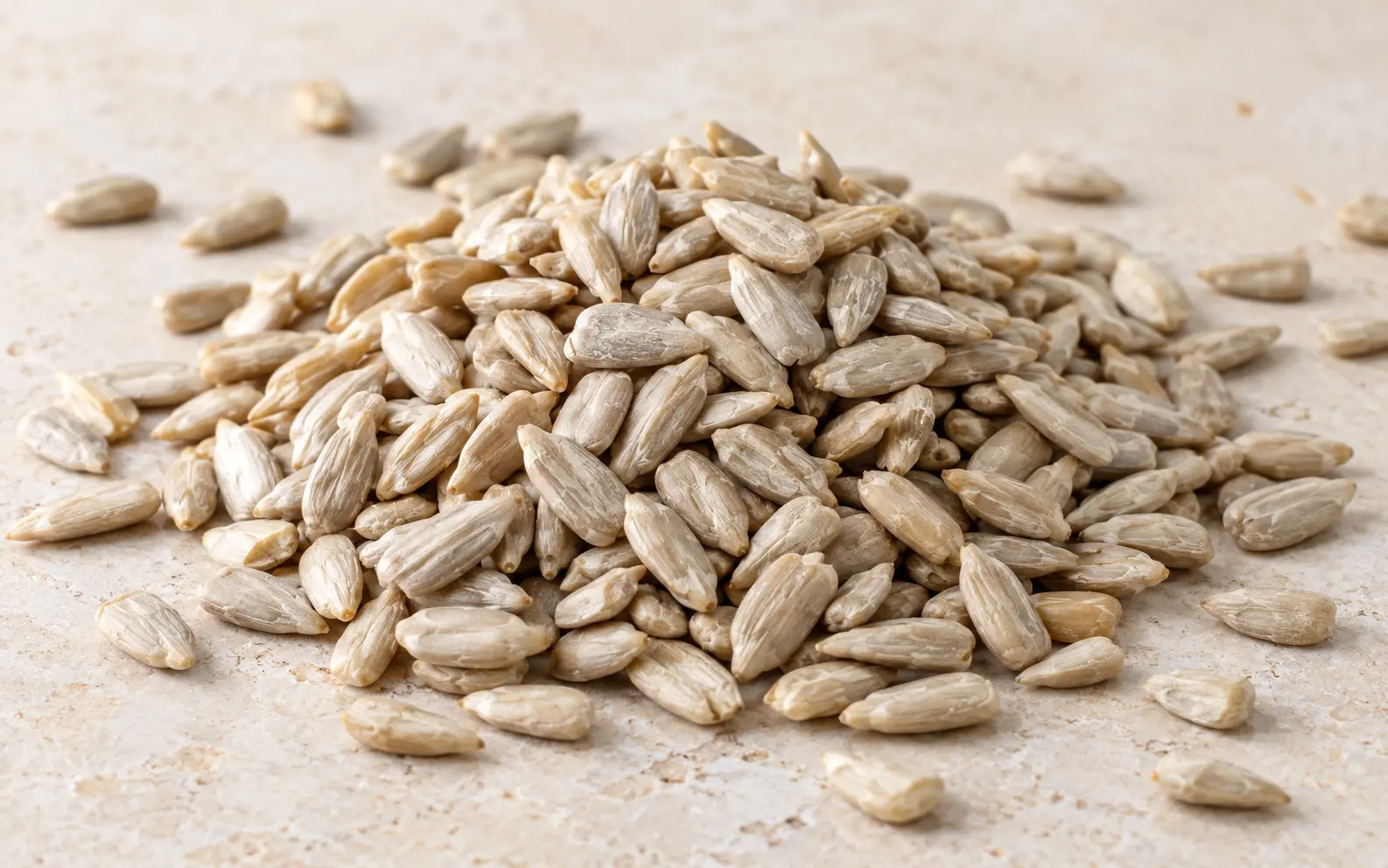
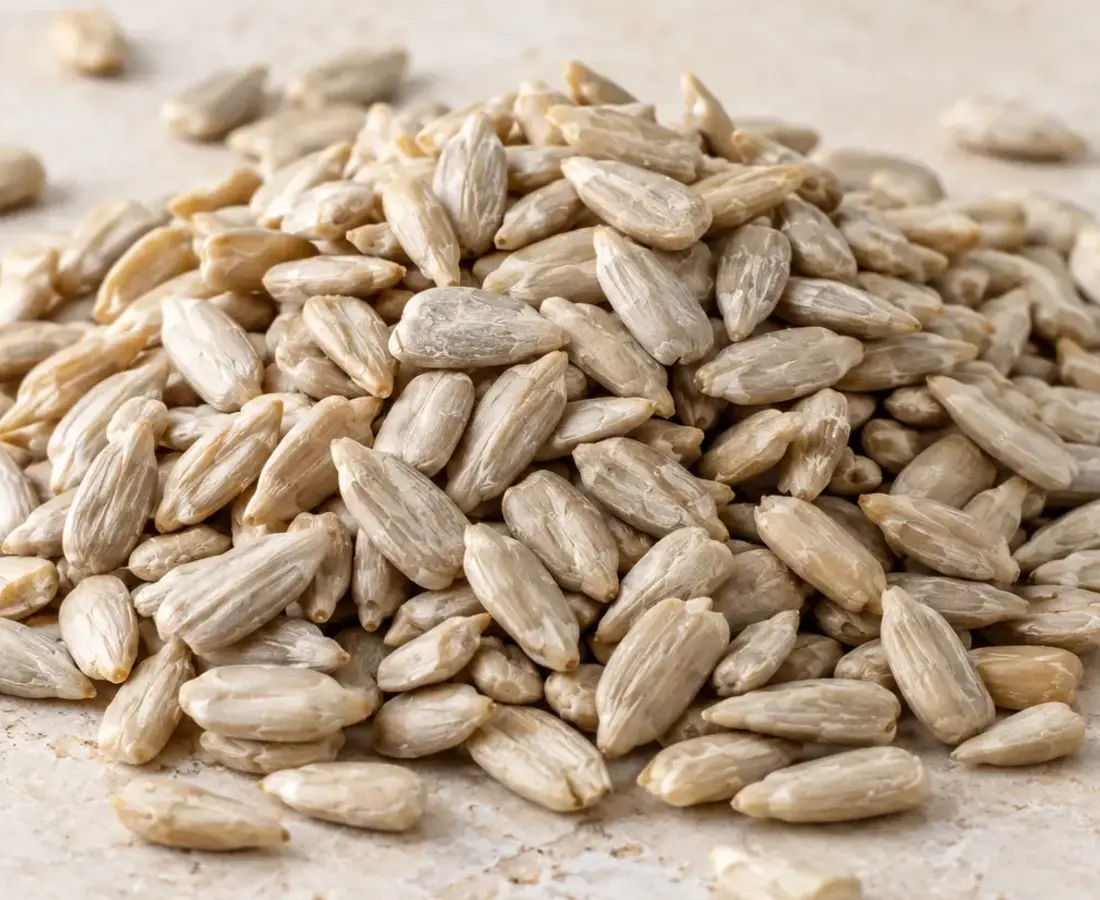
Dried sunflower-seed kernels
Scientific identity
Helianthus annuus L.
Edible part
Shelled mature seed kernel.
Source form
Seeds, sunflower seed kernels, dried, corresponding to USDA FoodData Central FDC 170562.
Do not merge with
Whole seeds in shell, roasted, salted or flavored kernels, sprouts, seed butter, oil, flour, supplements, other Helianthus species, and finished foods.
Safety boundary
Shells are not represented by the kernel record and can cause oral or gastrointestinal injury when consumed in quantity. Salt and flavor coatings are product-specific.
Publication decision
Identity and dried-kernel form defined; proceed with shell, roasting, salt, and product boundaries visible.
Seeds, sunflower seed kernels, dried, corresponding to USDA FoodData Central FDC 170562.
Authoritative control
Peer-reviewed case literature documents rectal seed bezoars and rare small-bowel obstruction after consumption of unshelled sunflower seeds; one adult case followed a large amount and required hospital evaluation. Case reports establish that severe obstruction can occur but do not define a safe threshold or predict an individual outcome.
What the human evidence supports
The edible snack component is the Helianthus annuus kernel; commercial hulls are normally cracked and discarded. Repeated oral irritation is compatible with mechanical/salt exposure, while the case literature supports a serious high-intake bowel boundary. A single accidental shell and habitual bulk ingestion are not equivalent.
Remove or qualify
Do not merge this chapter with: Whole seeds in shell, roasted, salted or flavored kernels, sprouts, seed butter, oil, flour, supplements, other Helianthus species, and finished foods. Remove or qualify medical-treatment, universal-safety, cross-species, cross-part, cross-product, and cross-preparation claims unless an exact source is reviewed for that wording.
Safety boundary
Shells are not represented by the kernel record and can cause oral or gastrointestinal injury when consumed in quantity. Salt and flavor coatings are product-specific.
Limitations and unresolved variables
Do not intentionally swallow hulls. Choose hulled kernels for people unable to separate shells. Severe/worsening abdominal pain, vomiting, bleeding, inability to pass stool or gas, or suspected impaction requires prompt medical assessment rather than self-treatment.
Publication decision
Bounded fact set is ready for controlled chapter rewrite; the legacy chapter and its broader claims remain unapproved.
Legacy narrative status
No legacy narrative sentence is approved by this fact-set decision. It must be rewritten from, or checked individually against, the bounded facts and exact sources recorded here.
Editorial portraitSunflower seeds: image must match the chapter’s stated edible part and source form.Edible-form detailSunflower seeds: close editorial detail of the chapter’s stated edible form.
Editorial boundary: These AI-generated orientation images must not be used to identify wild foods, judge edibility, prove safe preparation, or diagnose spoilage. The verified safety-image panel and written guidance control where present.
Book readiness · Rewrite 04
Controlled chapter rewrite
What this entry covers
Dried sunflower-seed kernels. Scientific identity: Helianthus annuus L. Edible part: Shelled mature seed kernel. Exact source form: Seeds, sunflower seed kernels, dried, corresponding to USDA FoodData Central FDC 170562.
The human question and observed experience
Question: Are sunflower-seed shells edible, and why do some people get mouth or bowel symptoms after eating large amounts?
Repeated experience: Separate discussions repeatedly describe sore tongue or lips after cracking highly salted in-shell seeds, with both abrasive shells and salt proposed. Other people report swallowing shells without immediate trouble, while several report painful constipation, bleeding or impaction after large amounts. Amount, shell size, chewing and prior bowel health vary widely.
Authoritative control
Peer-reviewed case literature documents rectal seed bezoars and rare small-bowel obstruction after consumption of unshelled sunflower seeds; one adult case followed a large amount and required hospital evaluation. Case reports establish that severe obstruction can occur but do not define a safe threshold or predict an individual outcome.
What the combined evidence supports
The edible snack component is the Helianthus annuus kernel; commercial hulls are normally cracked and discarded. Repeated oral irritation is compatible with mechanical/salt exposure, while the case literature supports a serious high-intake bowel boundary. A single accidental shell and habitual bulk ingestion are not equivalent.
Safety and limitations. Shells are not represented by the kernel record and can cause oral or gastrointestinal injury when consumed in quantity. Salt and flavor coatings are product-specific. Do not intentionally swallow hulls. Choose hulled kernels for people unable to separate shells. Severe/worsening abdominal pain, vomiting, bleeding, inability to pass stool or gas, or suspected impaction requires prompt medical assessment rather than self-treatment.
Exclude or qualify: Do not merge this chapter with: Whole seeds in shell, roasted, salted or flavored kernels, sprouts, seed butter, oil, flour, supplements, other Helianthus species, and finished foods. Remove or qualify medical-treatment, universal-safety, cross-species, cross-part, cross-product, and cross-preparation claims unless an exact source is reviewed for that wording.
Review status: This controlled rewrite uses the adjudicated identity, food-form, human-experience, authoritative-control, conclusion, and safety fields. It replaces broader legacy prose for this chapter layer but does not constitute final specialist or publication approval.
Final gate · Approval 04
Book-assembly disposition
Status: Approved for book assembly with required safety box
Approved for informational book assembly only with the authoritative safety-and-limitations box retained beside the chapter text.
Specialist-review flags: None
Safety-box triggers: kernel, pit
Final gate checks
Passed: controlled rewrite complete
Passed: five claim layers present
Passed: every claim layer has sources
Passed: human experience separated
Passed: authoritative control present
Passed: supported conclusion present
Passed: safety and limitations present
Passed: legacy prose excluded
Review scope: Final source-completeness, structure, exclusion, and risk-triage review for book assembly. This is not a claim that an external specialist reviewed the chapter.
Recorded checks and sources7 displayed nutrient values checked against the exact USDA FDC record and food form.7 narrative statements source-linked; independent support review pending.Batch 10 · reviewed Oct. 8, 2026 · numeric transcription check; full chapter unapproved.
Corrected USDA food/form panel · other claims unreviewed
Seeds, sunflower seed kernels, dried
dried sunflower seed kernels, without added salt. Other chapter claims unverified. The earlier mismatched or broader nutrient assignment is not used here. This panel describes only the named food and preparation, not every food sold under the glossary heading. A nutrient record does not establish raw-consumption safety.
Dried sunflower-kernel example
The source describes dried sunflower seed kernels. Seeds in shell, roasted or salted kernels, sunflower butter, flour, meal, oil, and flavored products need separate records because edible portion and processing differ.
USDA SR Legacy, per 100 g: Seeds, sunflower seed kernels, dried
Energy
584 kcal
Protein
20.8 g
Fat
51.5 g
Carbohydrate
20 g
Fiber
8.6 g
Total sugars
2.62 g
Potassium
645 mg
USDA FoodData Central FDC 170562 · SR Legacy (final release, April 2018). Values describe only this named form, not all products or varieties.
Human experience evidence · Batch 18
What people experience—and what the evidence supports
Evidence mapped
Question: Are sunflower-seed shells edible, and why do some people get mouth or bowel symptoms after eating large amounts?
Repeated human experience
Separate discussions repeatedly describe sore tongue or lips after cracking highly salted in-shell seeds, with both abrasive shells and salt proposed. Other people report swallowing shells without immediate trouble, while several report painful constipation, bleeding or impaction after large amounts. Amount, shell size, chewing and prior bowel health vary widely.
Authoritative explanation or control
Peer-reviewed case literature documents rectal seed bezoars and rare small-bowel obstruction after consumption of unshelled sunflower seeds; one adult case followed a large amount and required hospital evaluation. Case reports establish that severe obstruction can occur but do not define a safe threshold or predict an individual outcome.
What the evidence supports
The edible snack component is the Helianthus annuus kernel; commercial hulls are normally cracked and discarded. Repeated oral irritation is compatible with mechanical/salt exposure, while the case literature supports a serious high-intake bowel boundary. A single accidental shell and habitual bulk ingestion are not equivalent.
Limitations and safety boundary
Do not intentionally swallow hulls. Choose hulled kernels for people unable to separate shells. Severe/worsening abdominal pain, vomiting, bleeding, inability to pass stool or gas, or suspected impaction requires prompt medical assessment rather than self-treatment.
Open evidence records and sources
Human experience / Q&A
Independent public discussion threads
Finding: Separate discussions repeatedly describe sore tongue or lips after cracking highly salted in-shell seeds, with both abrasive shells and salt proposed. Other people report swallowing shells without immediate trouble, while several report painful constipation, bleeding or impaction after large amounts. Amount, shell size, chewing and prior bowel health vary widely.
Supported conclusion: The edible snack component is the Helianthus annuus kernel; commercial hulls are normally cracked and discarded. Repeated oral irritation is compatible with mechanical/salt exposure, while the case literature supports a serious high-intake bowel boundary. A single accidental shell and habitual bulk ingestion are not equivalent.
Limitations: Online reports are vivid but self-selected and sometimes contradictory. Case reports cannot quantify population risk, and salt, flavor coatings, kernels and hulls are confounded in mouth-soreness reports.
Evidence strength: Low: uncontrolled, self-selected reports; repetition is experiential only
Safety/current gate: Do not intentionally swallow hulls. Choose hulled kernels for people unable to separate shells. Severe/worsening abdominal pain, vomiting, bleeding, inability to pass stool or gas, or suspected impaction requires prompt medical assessment rather than self-treatment.
Finding: Peer-reviewed case literature documents rectal seed bezoars and rare small-bowel obstruction after consumption of unshelled sunflower seeds; one adult case followed a large amount and required hospital evaluation. Case reports establish that severe obstruction can occur but do not define a safe threshold or predict an individual outcome.
Supported conclusion: The edible snack component is the Helianthus annuus kernel; commercial hulls are normally cracked and discarded. Repeated oral irritation is compatible with mechanical/salt exposure, while the case literature supports a serious high-intake bowel boundary. A single accidental shell and habitual bulk ingestion are not equivalent.
Limitations: Online reports are vivid but self-selected and sometimes contradictory. Case reports cannot quantify population risk, and salt, flavor coatings, kernels and hulls are confounded in mouth-soreness reports.
Evidence strength: Peer-reviewed clinical case literature; applicability limited to the stated food identity, form and population
Safety/current gate: Do not intentionally swallow hulls. Choose hulled kernels for people unable to separate shells. Severe/worsening abdominal pain, vomiting, bleeding, inability to pass stool or gas, or suspected impaction requires prompt medical assessment rather than self-treatment.
These 8 links are organized by a matching whole-food name. Prepared products and ingredients have separate composition profiles. Confirm the identity and form on each page; a similar name alone is not proof.