Research draft — full chapter unapproved. Only the specifically cited claim or USDA panel below has a limited check; older research notes remain unverified. Do not use this chapter as foraging, preservation, or medical guidance. A checked claim applies only to its cited wording.
Book readiness · Identity 07
Food identity and publication boundary
Canonical identity
Sorghum grain, dry
Scientific identity
Sorghum bicolor (L.) Moench.
Edible part
Cleaned mature dry grain.
Source form
Sorghum grain, corresponding to USDA FoodData Central FDC 169716; this is not a cooked serving.
Do not merge with
Cooked pearled sorghum, flour, popped grain, syrup or sweet sorghum, bran, beverages, feed grain, fermented products, and finished foods.
Safety boundary
Grain and sweet-sorghum syrup are different foods. The dry-grain panel requires cooking-yield and preparation context before serving comparisons.
Publication decision
Identity and dry-grain form defined; proceed with cooked, flour, and syrup forms separated.
Sorghum grain, corresponding to USDA FoodData Central FDC 169716; this is not a cooked serving.
Authoritative control
USDA ARS reports a peer-reviewed Crop Science genetic study identifying loci associated with popping efficiency and kernel expansion. Sorghum popping traits are heritable, and the crop has not undergone popcorn's sustained selection for these traits.
What the human evidence supports
Food-grade Sorghum bicolor grain can pop, but grain selection can help explain variable outcomes. Household method reports support experimentation, not a guaranteed yield or a universal temperature. Genetics does not resolve each failed batch's moisture, storage or heat variables.
Remove or qualify
Do not merge this chapter with: Cooked pearled sorghum, flour, popped grain, syrup or sweet sorghum, bran, beverages, feed grain, fermented products, and finished foods. Remove or qualify medical-treatment, universal-safety, cross-species, cross-part, cross-product, and cross-preparation claims unless an exact source is reviewed for that wording.
Safety boundary
Grain and sweet-sorghum syrup are different foods. The dry-grain panel requires cooking-yield and preparation context before serving comparisons.
Limitations and unresolved variables
Scope is edible whole grain, not sorghum syrup, flour, forage or maize popcorn. Record grain lot, batch size, vessel and heat; avoid smoke/fire and do not infer that every unpopped kernel is soft or suitable for vulnerable eaters.
Publication decision
Bounded fact set is ready for controlled chapter rewrite; the legacy chapter and its broader claims remain unapproved.
Legacy narrative status
No legacy narrative sentence is approved by this fact-set decision. It must be rewritten from, or checked individually against, the bounded facts and exact sources recorded here.
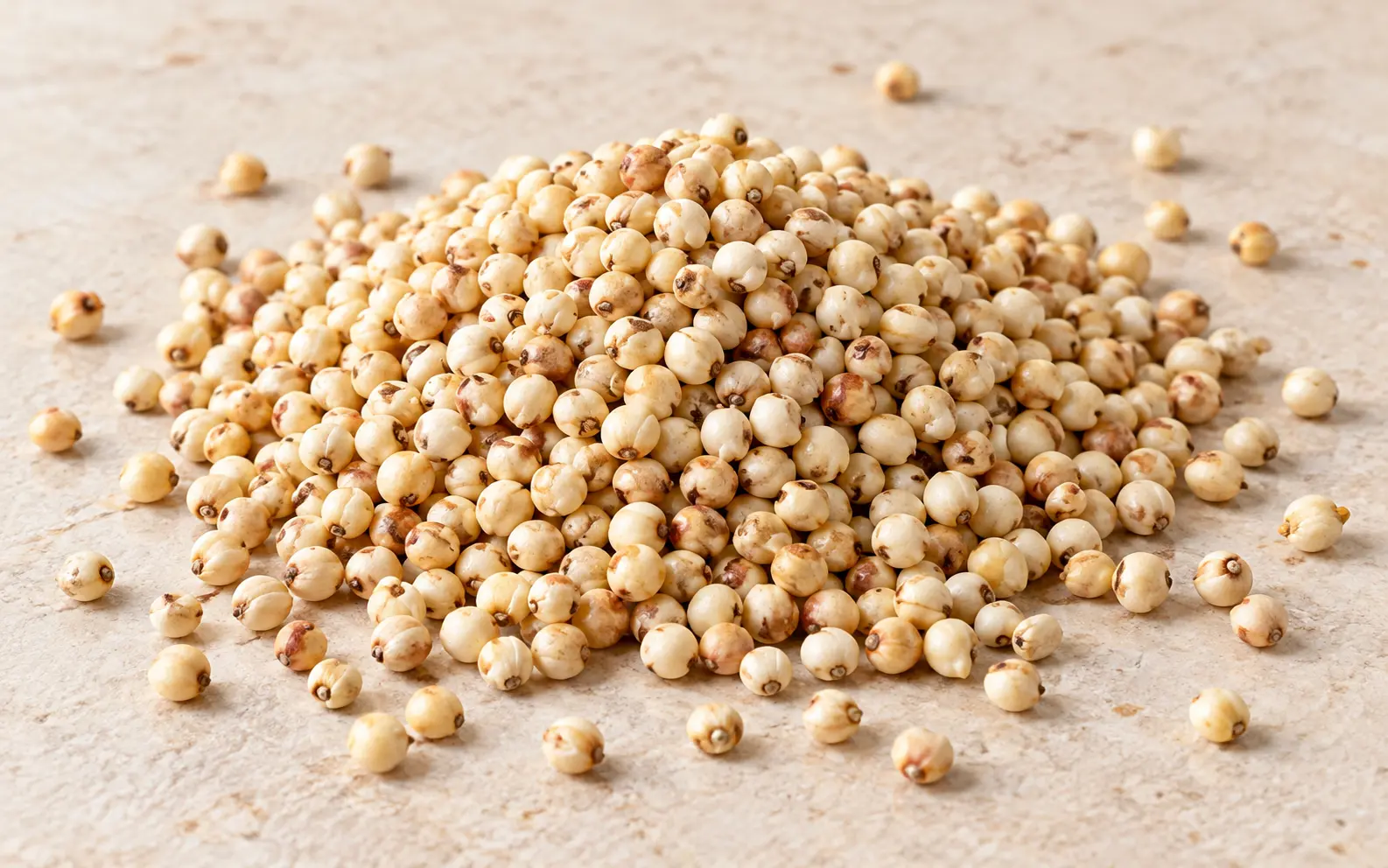
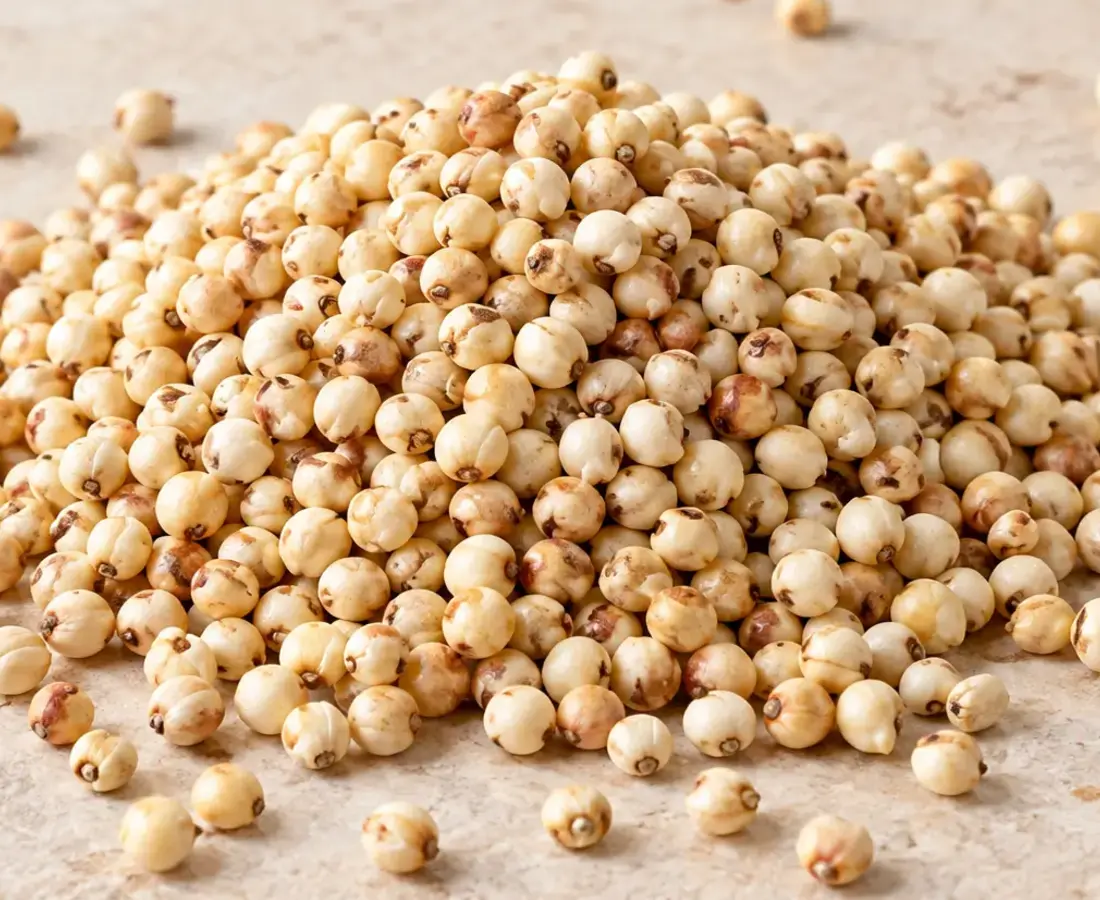
Editorial portraitSorghum: image must match the chapter’s stated edible part and source form.Edible-form detailSorghum: close editorial detail of the chapter’s stated edible form.
Editorial boundary: These AI-generated orientation images must not be used to identify wild foods, judge edibility, prove safe preparation, or diagnose spoilage. The verified safety-image panel and written guidance control where present.
Book readiness · Rewrite 04
Controlled chapter rewrite
What this entry covers
Sorghum grain, dry. Scientific identity: Sorghum bicolor (L.) Moench. Edible part: Cleaned mature dry grain. Exact source form: Sorghum grain, corresponding to USDA FoodData Central FDC 169716; this is not a cooked serving.
The human question and observed experience
Question: Why does sorghum burn or leave many kernels unpopped despite popcorn-style methods?
Repeated experience: Independent cooking threads repeatedly report low popping yield and burning in pans or microwaves. Some users succeed with small batches, constant agitation or silicone microwave containers; others give up. One self-estimated yield was revised upward, illustrating unreliable household percentages.
Authoritative control
USDA ARS reports a peer-reviewed Crop Science genetic study identifying loci associated with popping efficiency and kernel expansion. Sorghum popping traits are heritable, and the crop has not undergone popcorn's sustained selection for these traits.
What the combined evidence supports
Food-grade Sorghum bicolor grain can pop, but grain selection can help explain variable outcomes. Household method reports support experimentation, not a guaranteed yield or a universal temperature. Genetics does not resolve each failed batch's moisture, storage or heat variables.
Safety and limitations. Grain and sweet-sorghum syrup are different foods. The dry-grain panel requires cooking-yield and preparation context before serving comparisons. Scope is edible whole grain, not sorghum syrup, flour, forage or maize popcorn. Record grain lot, batch size, vessel and heat; avoid smoke/fire and do not infer that every unpopped kernel is soft or suitable for vulnerable eaters.
Exclude or qualify: Do not merge this chapter with: Cooked pearled sorghum, flour, popped grain, syrup or sweet sorghum, bran, beverages, feed grain, fermented products, and finished foods. Remove or qualify medical-treatment, universal-safety, cross-species, cross-part, cross-product, and cross-preparation claims unless an exact source is reviewed for that wording.
Review status: This controlled rewrite uses the adjudicated identity, food-form, human-experience, authoritative-control, conclusion, and safety fields. It replaces broader legacy prose for this chapter layer but does not constitute final specialist or publication approval.
Verified human-taken photographs
Safety image guide
These cleared reference photographs support the written safety guidance. They do not prove that a wild specimen is edible, that a preparation is safe, or that spoiled food can be rescued.
Identification reference
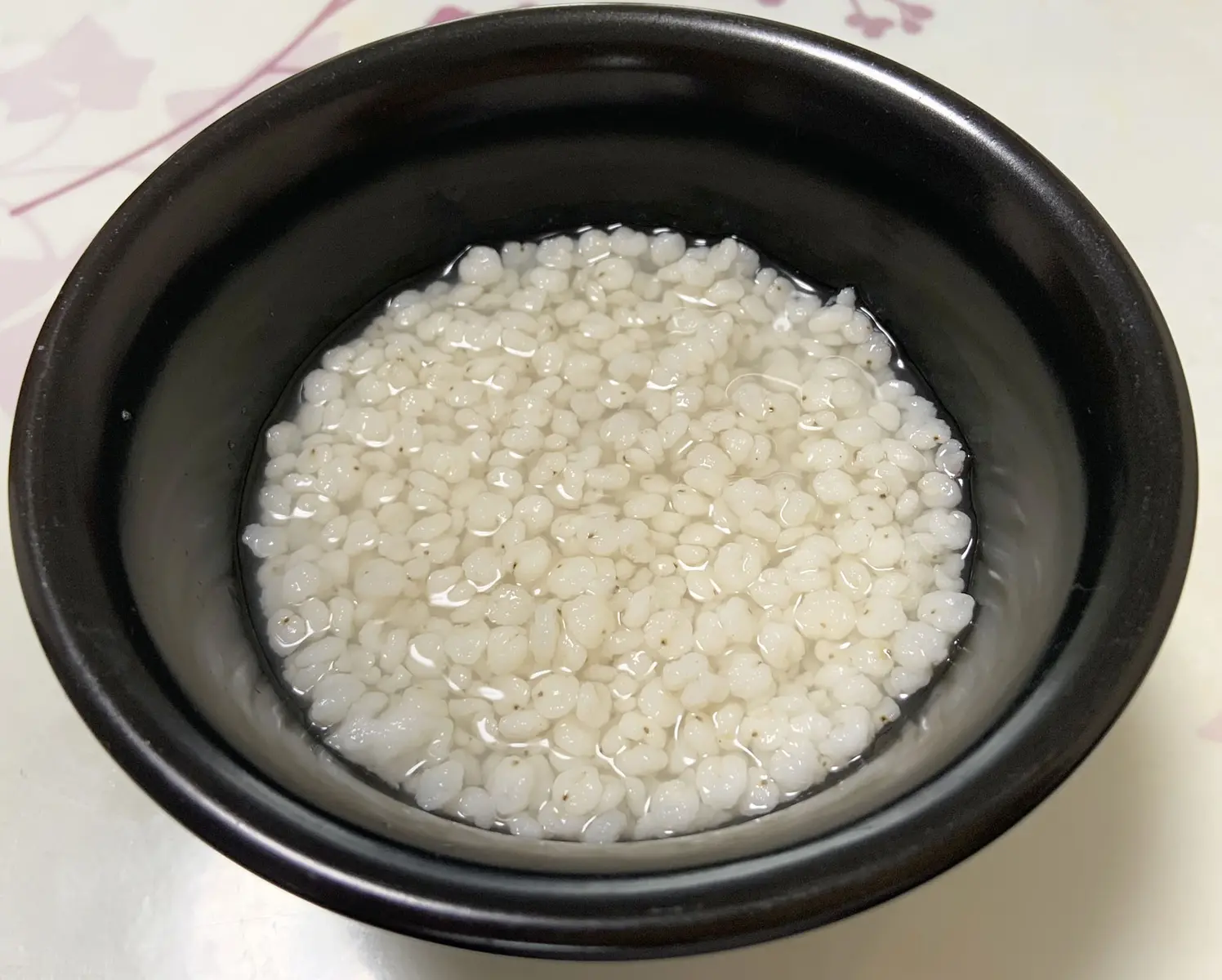
Edible sorghum grain
SorghumSorghum grain boiled.jpg · ウィキ太郎 CC0 1.0 Universal Public Domain Dedication · source and license
Use boundary: Reference only. Do not identify wild food, toxicity, or edibility from a photograph alone.
Status: Approved for book assembly with required safety box
Approved for informational book assembly only with the authoritative safety-and-limitations box retained beside the chapter text.
Specialist-review flags: None
Safety-box triggers: forag, kernel
Final gate checks
Passed: controlled rewrite complete
Passed: five claim layers present
Passed: every claim layer has sources
Passed: human experience separated
Passed: authoritative control present
Passed: supported conclusion present
Passed: safety and limitations present
Passed: legacy prose excluded
Review scope: Final source-completeness, structure, exclusion, and risk-triage review for book assembly. This is not a claim that an external specialist reviewed the chapter.
Recorded checks and sources7 displayed nutrient values checked against the exact USDA FDC record and food form.7 narrative statements source-linked; independent support review pending.Batch 10 · reviewed Oct. 8, 2026 · numeric transcription check; full chapter unapproved.
Corrected USDA food/form panel · other claims unreviewed
Sorghum grain
sorghum grain; not flour or syrup. Other chapter claims unverified. The earlier mismatched or broader nutrient assignment is not used here. This panel describes only the named food and preparation, not every food sold under the glossary heading. A nutrient record does not establish raw-consumption safety.
Sorghum-grain example
The source describes sorghum grain. Sorghum flour, cooked grain, popped sorghum, syrup, bran, malted products, feed grain, and mixed foods are different forms and require separate records.
USDA FoodData Central FDC 169716 · SR Legacy (final release, April 2018). Values describe only this named form, not all products or varieties.
Human experience evidence · Batch 17
What people experience—and what the evidence supports
Evidence mapped
Question: Why does sorghum burn or leave many kernels unpopped despite popcorn-style methods?
Repeated human experience
Independent cooking threads repeatedly report low popping yield and burning in pans or microwaves. Some users succeed with small batches, constant agitation or silicone microwave containers; others give up. One self-estimated yield was revised upward, illustrating unreliable household percentages.
Authoritative explanation or control
USDA ARS reports a peer-reviewed Crop Science genetic study identifying loci associated with popping efficiency and kernel expansion. Sorghum popping traits are heritable, and the crop has not undergone popcorn's sustained selection for these traits.
What the evidence supports
Food-grade Sorghum bicolor grain can pop, but grain selection can help explain variable outcomes. Household method reports support experimentation, not a guaranteed yield or a universal temperature. Genetics does not resolve each failed batch's moisture, storage or heat variables.
Limitations and safety boundary
Scope is edible whole grain, not sorghum syrup, flour, forage or maize popcorn. Record grain lot, batch size, vessel and heat; avoid smoke/fire and do not infer that every unpopped kernel is soft or suitable for vulnerable eaters.
Open evidence records and sources
Human experience / Q&A
Independent public discussion threads
Finding: Independent cooking threads repeatedly report low popping yield and burning in pans or microwaves. Some users succeed with small batches, constant agitation or silicone microwave containers; others give up. One self-estimated yield was revised upward, illustrating unreliable household percentages.
Supported conclusion: Food-grade Sorghum bicolor grain can pop, but grain selection can help explain variable outcomes. Household method reports support experimentation, not a guaranteed yield or a universal temperature. Genetics does not resolve each failed batch's moisture, storage or heat variables.
Limitations: Genetic association supports variety effects, not validation of home popping recipes. Household moisture and temperature were not measured; self-reported rates and fresh/stale explanations are uncertain.
Evidence strength: Low: uncontrolled, self-selected reports; repetition is experiential only
Safety/current gate: Scope is edible whole grain, not sorghum syrup, flour, forage or maize popcorn. Record grain lot, batch size, vessel and heat; avoid smoke/fire and do not infer that every unpopped kernel is soft or suitable for vulnerable eaters.
USDA ARS summary of peer-reviewed genetic experiment
Finding: USDA ARS reports a peer-reviewed Crop Science genetic study identifying loci associated with popping efficiency and kernel expansion. Sorghum popping traits are heritable, and the crop has not undergone popcorn's sustained selection for these traits.
Supported conclusion: Food-grade Sorghum bicolor grain can pop, but grain selection can help explain variable outcomes. Household method reports support experimentation, not a guaranteed yield or a universal temperature. Genetics does not resolve each failed batch's moisture, storage or heat variables.
Limitations: Genetic association supports variety effects, not validation of home popping recipes. Household moisture and temperature were not measured; self-reported rates and fresh/stale explanations are uncertain.
Evidence strength: USDA ARS summary of peer-reviewed genetic experiment; applicability limited to stated food form and population
Safety/current gate: Scope is edible whole grain, not sorghum syrup, flour, forage or maize popcorn. Record grain lot, batch size, vessel and heat; avoid smoke/fire and do not infer that every unpopped kernel is soft or suitable for vulnerable eaters.
These 10 links are organized by a matching whole-food name. Prepared products and ingredients have separate composition profiles. Confirm the identity and form on each page; a similar name alone is not proof.