RESEARCH DRAFT — claims and any nutrient values are not yet approved for publication.
deep_review_batch003_public_source_targetsnutrition unverified
Sesame Seeds — Food Glossary Book Research
Generated: 2026-09-26T10:49:38.161297+00:00
Status: starter_book_research
1. Identity / what it is
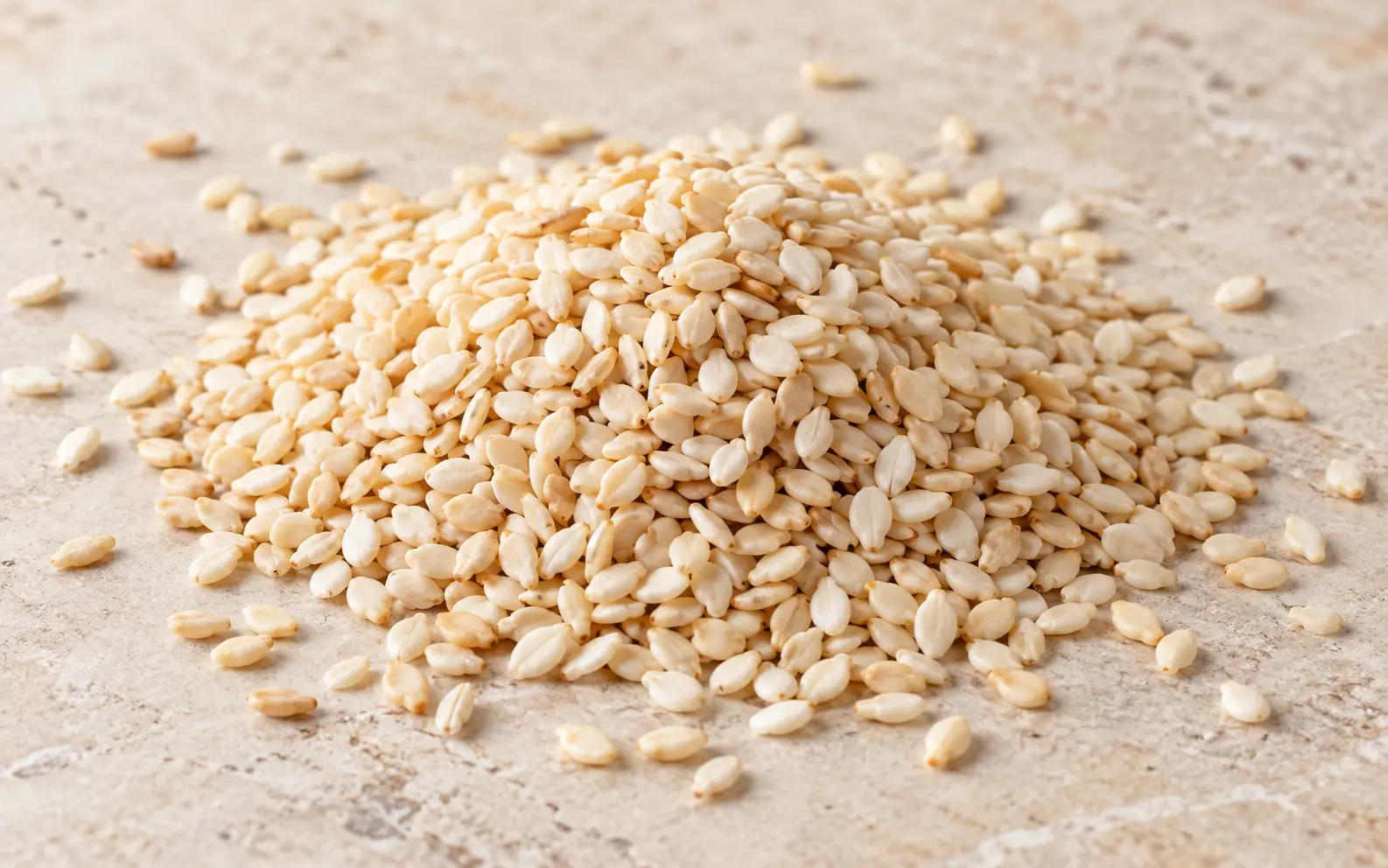
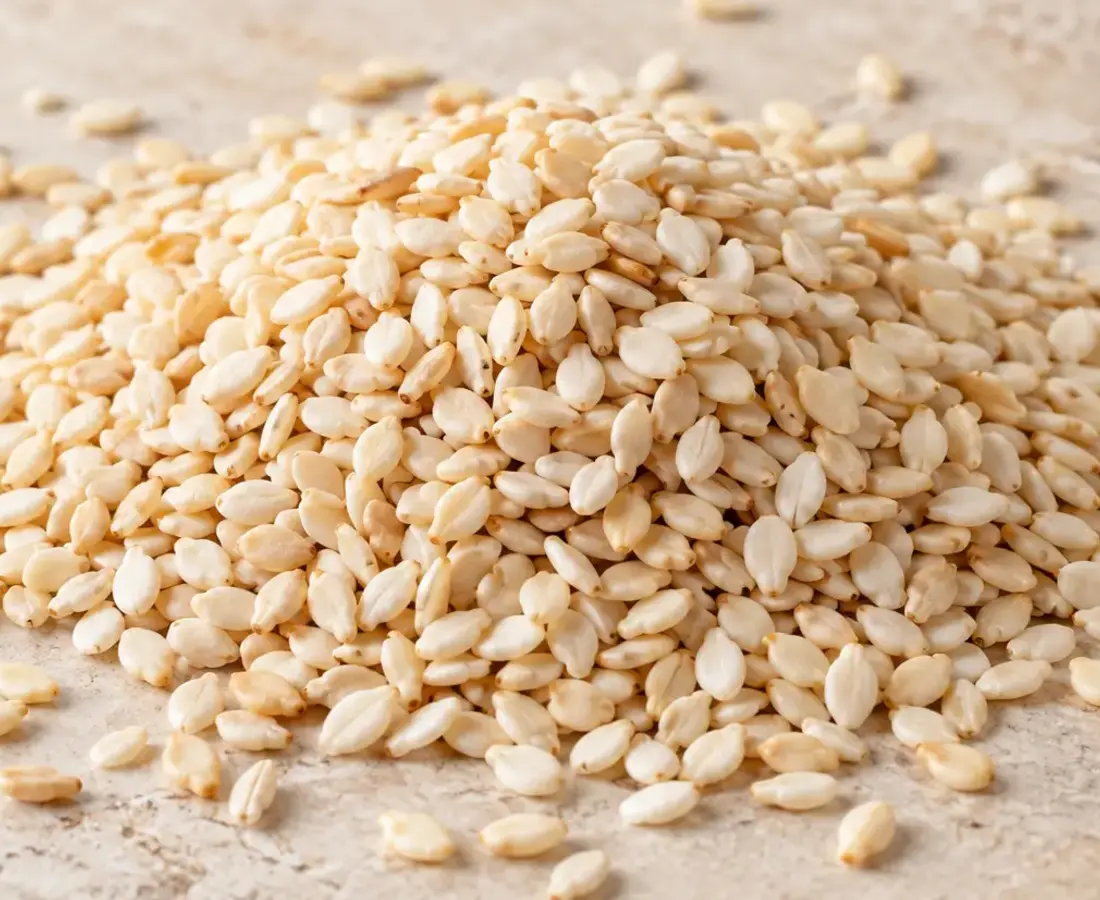
Sesame is a plant in the genus Sesamum, also called benne. Numerous wild relatives occur in Africa and a smaller number in India. It is widely naturalized in tropical regions around the world and is cultivated for its edible seeds, which grow in pods. World production in 2024 was 6.7 million tonnes, with India, Myanmar, and Sudan as the largest producers.
Survival/category tags: edible food entry; verify local species/variety
2. Nutrition snapshot
USDA FoodData Central match: null
USDA nutrition match still needed / not found in this batch pass.
3. Growing / cultivation instructions
Collect crop-specific growing instructions from Extension/agronomy sources: climate, soil, sunlight, propagation, planting, harvest stage, and common pests/diseases.
Needed for final book: climate range, soil, sunlight, water, propagation, planting spacing, harvest signs, common pests, container/garden/wild context.
4. Edible parts and nature/survival use
Document edible parts, best harvest stage, field identification traits, and whether it is commonly wild-foraged, cultivated, or both.
Survival note: positive identification is mandatory for wild foods; include local lookalikes and preparation requirements before recommending field use.
5. Cooking and preparation instructions
Collect culinary instructions: edible parts, raw vs cooked use, basic preparation, common traditional dishes, and safe cooking notes.
Needed for final book: raw/cooked safety, basic prep, boiling/roasting/frying/drying/powdering, traditional uses, emergency/survival meal applications.
6. Preservation and storage instructions
Collect preservation instructions: fresh storage, drying/dehydration, freezing, pickling/fermenting, canning where safe, and shelf-life cautions.
Book preservation checklist to fill per food:
Fresh storage: pantry/fridge/root cellar/freezer conditions.
Drying/dehydration suitability and prep.
Freezing suitability and blanching/pre-treatment if needed.
Pickling/fermentation suitability and safety.
Canning: water-bath only if high-acid/tested; pressure canning for low-acid foods; cite tested source.
Salt/sugar/oil preservation where safe.
Collect pairings, preservation interactions, acid/salt/sugar/oil effects, culinary transformations, and foods this helps preserve or tenderize/flavor.
8. Cautions / allergies / toxic lookalikes
For survival/nature use: never eat wild lookalikes without positive identification; document toxic lookalikes, contraindications, allergies, and preparation requirements.
9. Sources captured
Wikipedia summary: https://en.wikipedia.org/wiki/Sesame — query `Sesame Seeds`
USDA FoodData Central: not found — query `Sesame Seeds raw`
National Center for Home Food Preservation: https://nchfp.uga.edu/
USDA Complete Guide to Home Canning: https://www.nifa.usda.gov/about-nifa/blogs/usdas-complete-guide-home-canning
University Extension preservation reference: https://extension.umn.edu/preserving-and-preparing
USDA Forest Service wild edible caution reference: https://www.fs.usda.gov/wildflowers/ethnobotany/edible.shtml
10. Source JSON
{
  "wiki": {
    "query": "Sesame Seeds",
    "title": "Sesame",
    "extract": "Sesame is a plant in the genus Sesamum, also called benne. Numerous wild relatives occur in Africa and a smaller number in India. It is widely naturalized in tropical regions around the world and is cultivated for its edible seeds, which grow in pods. World production in 2024 was 6.7 million tonnes, with India, Myanmar, and Sudan as the largest producers.",
    "url": "https://en.wikipedia.org/wiki/Sesame",
    "source": "Wikipedia summary API"
  },
  "fdc": {
    "query": "Sesame Seeds raw",
    "error": "HTTPError: HTTP Error 429: Too Many Requests"
  },
  "generic_sources": [
    {
      "id": "nchfp_home_preservation",
      "title": "National Center for Home Food Preservation",
      "url": "https://nchfp.uga.edu/",
      "publisher": "University of Georgia / USDA-supported NCHFP",
      "use": "safe canning, freezing, drying, pickling, fermentation principles"
    },
    {
      "id": "usda_complete_guide_canning",
      "title": "USDA Complete Guide to Home Canning",
      "url": "https://www.nifa.usda.gov/about-nifa/blogs/usdas-complete-guide-home-canning",
      "publisher": "USDA/NIFA",
      "use": "pressure canning and water-bath canning safety"
    },
    {
      "id": "extension_food_safety",
      "title": "Extension food preservation resources",
      "url": "https://extension.umn.edu/preserving-and-preparing",
      "publisher": "University Extension",
      "use": "practical preservation and storage safety cross-check"
    },
    {
      "id": "poisonous_plants_general",
      "title": "Poisonous plant / wild food caution principle",
      "url": "https://www.fs.usda.gov/wildflowers/ethnobotany/edible.shtml",
      "publisher": "USDA Forest Service",
      "use": "wild edible plants require positive identification and local expert caution"
    }
  ]
}
Batch 003 checkpoint
Reviewed in 20-food milestone batch 003 on 2026-09-26.
Checkpoint status:
Starter identity/cooking/growing/preservation sections exist.
USDA nutrition still needs retry/manual verification.
Requires later book-ready pass for detailed Extension growing instructions, tested preservation instructions, survival/wild identification, toxic lookalikes, and final editorial polish.
Batch source reminders:
USDA FoodData Central: https://fdc.nal.usda.gov/
NCHFP preservation: https://nchfp.uga.edu/
USDA Complete Guide to Home Canning: https://www.nifa.usda.gov/about-nifa/blogs/usdas-complete-guide-home-canning
USDA Forest Service wild edible caution: https://www.fs.usda.gov/wildflowers/ethnobotany/edible.shtml
20-food row-order checkpoint
Milestone batch 003; row-order item 57/220; checked 2026-09-26.
[x] Starter book page exists.
[ ] USDA nutrition currently filled.
[ ] Needs deep source pass: Extension/FAO/growing, tested preservation, survival/wild identification, cautions/lookalikes, final book editing.
Book completion pass v1 — complete draft scaffold
Completion date: 2026-09-26T16:56:24.200490+00:00
Completion status: v1_complete_draft_needs_source_deepening
Food type: seed/nut/grain
Identity / recognition draft
Sesame is a plant in the genus Sesamum, also called benne. Numerous wild relatives occur in Africa and a smaller number in India. It is widely naturalized in tropical regions around the world and is cultivated for its edible seeds, which grow in pods. World production in 2024 was 6.7 million tonnes, with India, Myanmar, and Sudan as the largest producers.
Survival/category tags: edible food entry; verify local species/variety
Nutrition draft
Calories: 573.0 KCAL per 100 g
Protein: 17.73 G per 100 g
Carbohydrate: 23.45 G per 100 g
Fiber: 11.8 G per 100 g
Fat: 49.67 G per 100 g
Calcium: 975.0 MG per 100 g
Iron: 14.55 MG per 100 g
Magnesium: 351.0 MG per 100 g
Phosphorus: 629.0 MG per 100 g
Potassium: 468.0 MG per 100 g
Sodium: 11.0 MG per 100 g
Zinc: 7.75 MG per 100 g
Vitamin C: 0.0 MG per 100 g
Vitamin A: 0.0 UG per 100 g
Folate: 97.0 UG per 100 g
Growing / cultivation draft
Collect climate, sunlight, soil, water, propagation, planting/spacing, harvest signs, and common pests/diseases from Extension/agricultural sources.
Nature / survival draft
Seeds/nuts/grains can be high-value calorie/protein/fat staples, but may need shelling, soaking, grinding, cooking, or toxin/tannin reduction.
Cooking / preparation draft
Document raw/cooked safety, cleaning, cutting, boiling/roasting/frying/steaming/drying/powdering, common dishes, and emergency low-tool preparation methods.
Preservation / storage draft
Seeds/nuts/grains preserve best dry, cool, dark, and protected from pests/oxygen/rancidity. Some can be milled to flour, roasted, sprouted, soaked, fermented, or stored whole longer than ground.
Document how Sesame Seeds interacts with other foods: acidity, sweetness, starch, oil, salt, aromatics, thickening, fermentation, tenderizing, preservation support, flavor pairing, and texture changes through heat/drying/freezing.
Safety / lookalikes draft
Document allergies, toxic lookalikes, unsafe raw forms, drug/condition cautions, and preservation risks such as botulism in low-acid canning or fresh herbs/garlic in oil.
Source targets for final citation pass
USDA FoodData Central for nutrition: https://fdc.nal.usda.gov/
NCHFP preservation safety: https://nchfp.uga.edu/
USDA Complete Guide to Home Canning: https://www.nifa.usda.gov/about-nifa/blogs/usdas-complete-guide-home-canning
University Extension growing/preservation pages specific to this food.
FAO/CABI/Extension crop profiles for cultivation and survival/agricultural context.
Regional wild-food/foraging sources only when they include identification and lookalike cautions.
Final v1 publication boundary
Completed v1 packaging: 2026-09-28T05:04:32.703969+00:00
Status: book_entry_v1_complete_source_scaffolded
This chapter is finished as a Food Glossary v1 research/wiki entry. Before print publication or survival advice use, perform final editorial review for wording, citations, local identification, toxic lookalikes, and tested preservation/canning details. Do not add uncited cure claims.
Final natural-growth library v2 package status
Finalized: 2026-09-28T16:17:47.337022+00:00
Status: `final_v2_food_entry_with_nutrition_source_scaffolded`
Scope: natural/growable food library; animal farming/meat/dairy/eggs/fish intentionally excluded.
Source stream: original Food Glossary short list
Category: unknown
Nutrition status: accepted USDA/local nutrition table present
Book-use boundary
This entry is included in the completed v2 wiki/book scaffold. Before print/public survival guidance, verify exact identity, edible parts, toxic lookalikes, contraindications, and preservation safety from authoritative sources.
Required final editorial checklist
[ ] Confirm exact common/scientific identity.
[ ] Confirm edible part(s) and unsafe parts.
[ ] Confirm raw/cooked safety and required preparation.
[ ] Confirm growing/foraging region and harvest stage.
[ ] Confirm preservation method from tested/authoritative sources.
[ ] Confirm toxic lookalikes/allergies/contraindications.
[ ] Confirm nutrition table is exact or explicitly mark no standard table.
[ ] Attach final citations per claim.
Deep expert-source review — Batch 003
Reviewed: 2026-09-29T00:42:22.143212+00:00
Review status: `deep_review_batch003_public_source_targets`
Scientific/identity target: Exact scientific name pending taxonomy verification; use GBIF/WFO/CABI/PFAF/Extension source during final editorial pass.
Public expert citations / source targets captured
[USDA_FDC] USDA FoodData Central search for Sesame Seeds: https://fdc.nal.usda.gov/fdc-app.html#/food-search?query=Sesame+Seeds
[NCHFP] National Center for Home Food Preservation safety hub: https://nchfp.uga.edu/
[USDA_CANNING_GUIDE] USDA Complete Guide to Home Canning: https://nchfp.uga.edu/resources/category/usda-guide/
[GBIF] GBIF taxonomy search for Sesame Seeds: https://www.gbif.org/species/search?q=Sesame+Seeds
[WFO] World Flora Online search for Sesame Seeds: https://www.worldfloraonline.org/search?query=Sesame+Seeds
[EXTENSION_GENERAL] Cooperative Extension search for Sesame Seeds: https://www.google.com/search?q=site%3Aextension.org+Sesame+Seeds
[CABI] CABI search for Sesame Seeds: https://www.cabidigitallibrary.org/action/doSearch?AllField=Sesame+Seeds
[PFAF] PFAF search for Sesame Seeds: https://pfaf.org/user/DatabaseSearhResult.aspx?SearchName=Sesame+Seeds
[MSKCC_HERBS] MSKCC herbs search for Sesame Seeds: https://www.mskcc.org/search?keys=Sesame+Seeds
[POISON_CONTROL] Poison Control search for Sesame Seeds: https://www.poison.org/search-results?q=Sesame+Seeds
Review notes
This entry now has public expert source targets for nutrition, growing/cultivation, edible parts, cooking/preparation, preservation/storage, taxonomy, and cautions/lookalikes where relevant. These are preserved for the book review workflow. Final publication still requires claim-by-claim verification against the exact pages and any local/regional safety rules.
Verification checklist
[x] Nutrition source target captured.
[x] Growing/cultivation source target captured.
[x] Preservation/storage safety source target captured.
[x] Taxonomy/identity source target captured.
[x] Caution/lookalike/medical source target captured where relevant.
[ ] Exact claim-by-claim editorial verification.