Repeated human experience
Cooks remove tough outer leaves, trim to the pale lower stalk, bruise pieces for soups or finely mince the tender core; fibrous pieces are often removed before serving.
Book readiness · Identity 07
Book readiness · Publication 03
Visual orientation
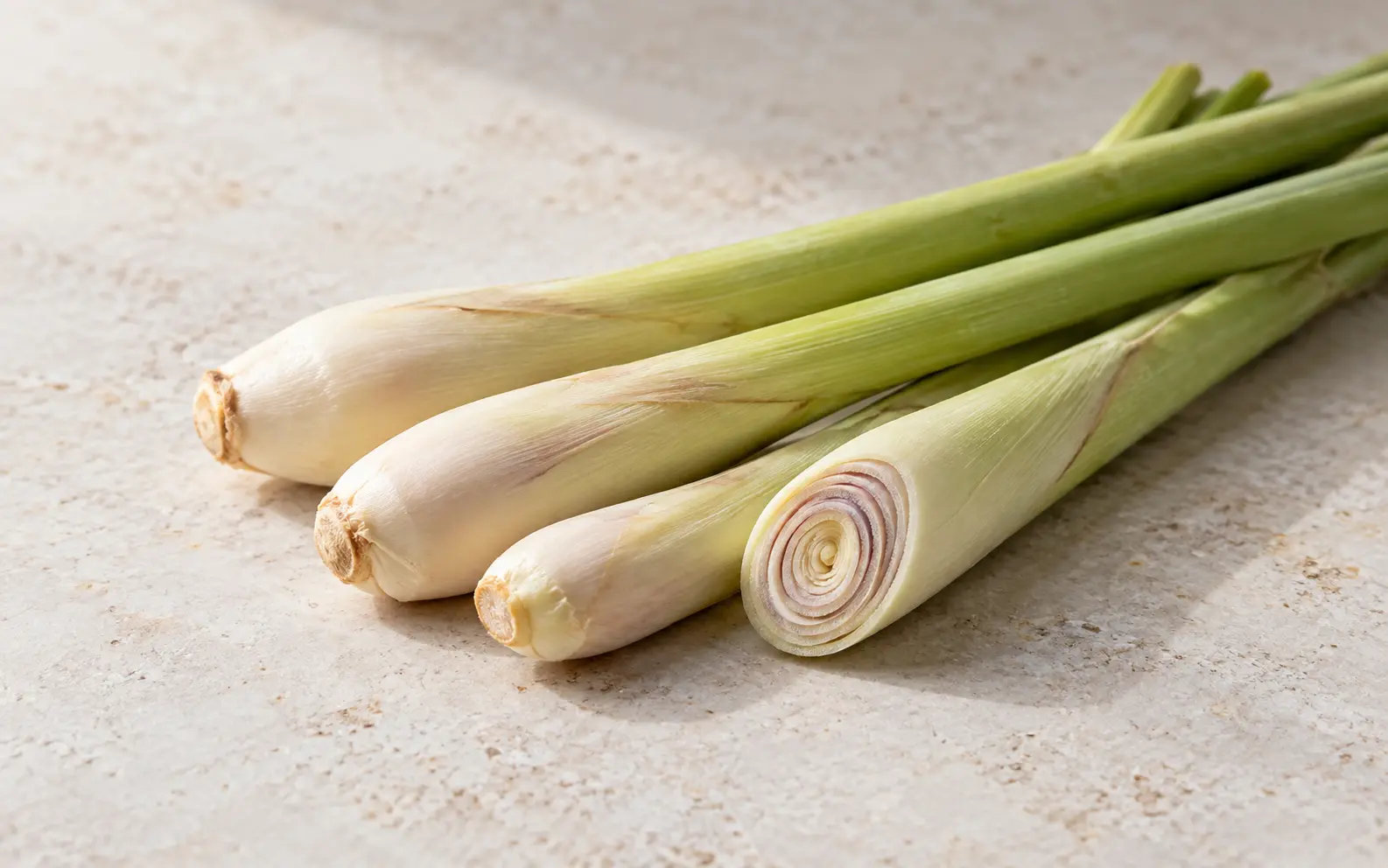
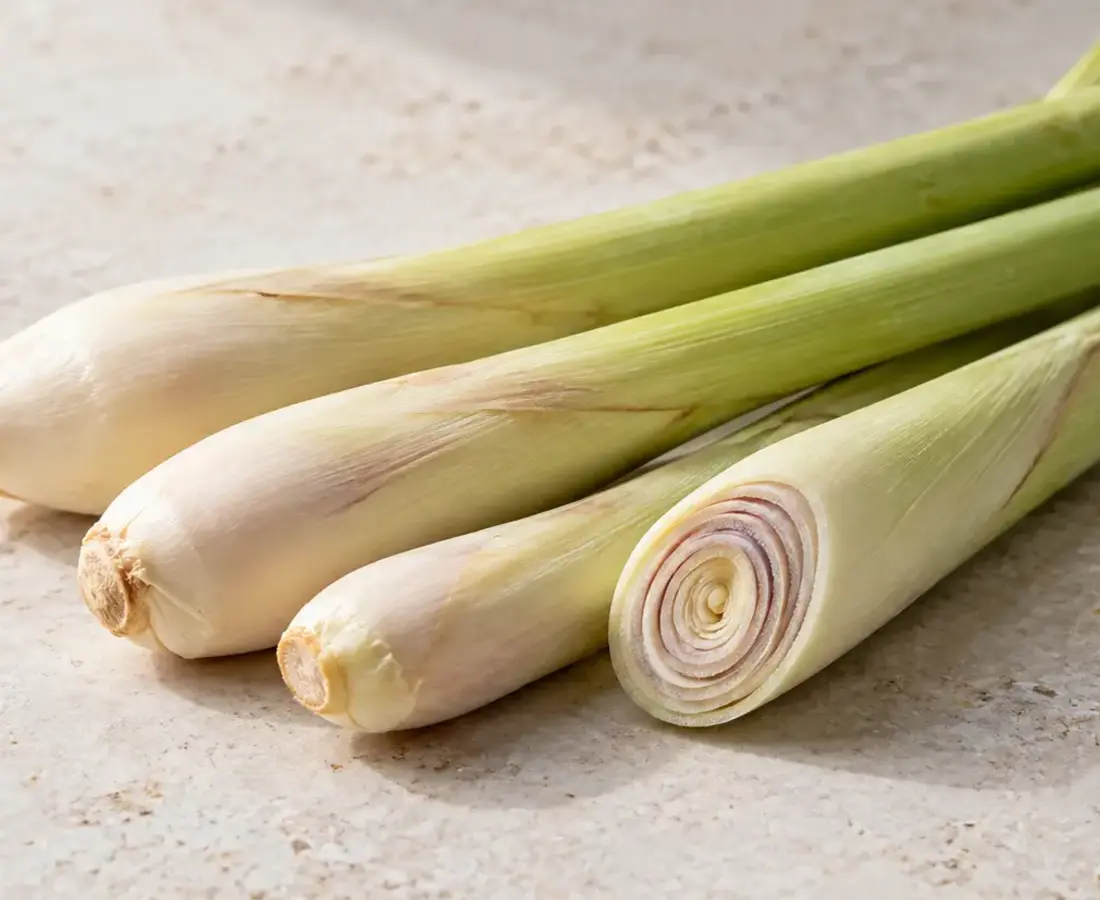
Editorial boundary: These AI-generated orientation images must not be used to identify wild foods, judge edibility, prove safe preparation, or diagnose spoilage. The verified safety-image panel and written guidance control where present.
Book readiness · Rewrite 03
Culinary lemongrass stalk, raw. Scientific identity: Cymbopogon citratus (DC.) Stapf; other Cymbopogon species sold as citronella are not interchangeable. Edible part: Tender lower leaf bases or stalk used as a culinary aromatic. Exact source form: Lemon grass (citronella), raw, corresponding to USDA FoodData Central FDC 168573; the legacy label is broader than the accepted culinary species scope.
Question: Which part of lemongrass is tender enough to eat, and which part is used only for infusion?
Repeated experience: Cooks remove tough outer leaves, trim to the pale lower stalk, bruise pieces for soups or finely mince the tender core; fibrous pieces are often removed before serving.
UF/IFAS gives the same preparation boundary: remove tough outer leaves, then cut or bruise the inner stalk for culinary use.
Repeated practice and extension guidance agree that cut size and removal depend on tissue toughness and intended use.
Exclude or qualify: Do not merge this chapter with: Citronella grass, C. nardus or C. winterianus, leaves not sold for food, essential oil, tea concentrates, extracts, supplements, dried powder, and finished foods. Remove or qualify medical-treatment, universal-safety, cross-species, cross-part, cross-product, and cross-preparation claims unless an exact source is reviewed for that wording.
| Layer | Disposition | Sources |
|---|---|---|
| Identity And Form | supported for bounded scope | [1] [2] [3] |
| Human Experience | experience documented not generalized | [4] |
| Authoritative Control | supported control | [2] |
| Supported Conclusion | supported with stated limits | [4] [2] |
| Safety And Limitations | required boundary | [1] [2] [3] |
Review status: This controlled rewrite uses the adjudicated identity, food-form, human-experience, authoritative-control, conclusion, and safety fields. It replaces broader legacy prose for this chapter layer but does not constitute final specialist or publication approval.
Final gate · Approval 03
Status: Approved for book assembly with required safety box
Approved for informational book assembly only with the authoritative safety-and-limitations box retained beside the chapter text.
Specialist-review flags: None
Safety-box triggers: concentrat, essential oil
Review scope: Final source-completeness, structure, exclusion, and risk-triage review for book assembly. This is not a claim that an external specialist reviewed the chapter.
Book placement · Volume 3
Chapter 22 in The Food Glossary: Evidence Edition — Volume 3. The authoritative safety box is mandatory in every edition.
Corrected USDA food/form panel · other claims unreviewed
raw lemongrass. Other chapter claims unverified. The earlier mismatched or broader nutrient assignment is not used here. This panel describes only the named food and preparation, not every food sold under the glossary heading. A nutrient record does not establish raw-consumption safety.
This source describes lemon grass or citronella, raw. Dried lemongrass, tea, extract, essential oil, seasoning paste, and prepared dishes are different forms or products and need their own evidence.
USDA FoodData Central: lemon grass, raw · FDA: produce safety
| Energy | 99 kcal |
|---|---|
| Protein | 1.82 g |
| Fat | 0.49 g |
| Carbohydrate | 25.3 g |
| Potassium | 723 mg |
USDA FoodData Central FDC 168573 · SR Legacy (final release, April 2018). Values describe only this named form, not all products or varieties.
Human experience evidence · Batch 12
Question: Which part of lemongrass is tender enough to eat, and which part is used only for infusion?
Cooks remove tough outer leaves, trim to the pale lower stalk, bruise pieces for soups or finely mince the tender core; fibrous pieces are often removed before serving.
UF/IFAS gives the same preparation boundary: remove tough outer leaves, then cut or bruise the inner stalk for culinary use.
Repeated practice and extension guidance agree that cut size and removal depend on tissue toughness and intended use.
Name stalk or leaf form. Distinguish food use from essential oils and supplement products.
Reddit Cooking for Beginners
Finding: Cooks remove tough outer leaves, bruise or slice the pale inner stalk, simmer it for flavor, and remove fibrous pieces unless minced very finely.
Supported conclusion: Replicates the tender-core versus infusion-piece distinction.
Limitations: Home advice does not validate essential-oil ingestion or medical claims.
Evidence strength: Repeated preparation signal
Safety/current gate: No
UF/IFAS Gardening Solutions
Finding: UF/IFAS advises removing tough outer leaves and cutting or bruising the inner stalk for culinary use.
Supported conclusion: Confirms the tissue and preparation boundary.
Limitations: Culinary stalk use does not establish safety of concentrated oil or supplements.
Evidence strength: University extension control
Safety/current gate: No
Nutrition for raw lemongrass. USDA record: Lemon grass (citronella), raw.
| Nutrient | Amount |
|---|---|
| Energy | 99 kcal |
| Protein | 1.82 g |
| Fat | 0.49 g |
| Carbohydrate | 25.3 g |
| Calcium | 65 mg |
| Iron | 8.17 mg |
| Magnesium | 60 mg |
| Phosphorus | 101 mg |
| Potassium | 723 mg |
| Sodium | 6 mg |
| Zinc | 2.23 mg |
| Vitamin A, RAE | 0 µg |
| Vitamin C | 2.6 mg |
| Folate, total | 75 µg |
USDA FoodData Central FDC 168573, SR Legacy (April 2018).
Identity, preparation safety, growing, preservation, and health claims are not yet approved. No field-use or canning guidance is established here.