Repeated human experience
Human Q&A repeatedly separates swallowing one intact pit from chewing or crushing pits, but commenters often invent precise toxic-dose numbers that are not reliable.
Book readiness · Identity 07
Book readiness · Publication 02
Visual orientation
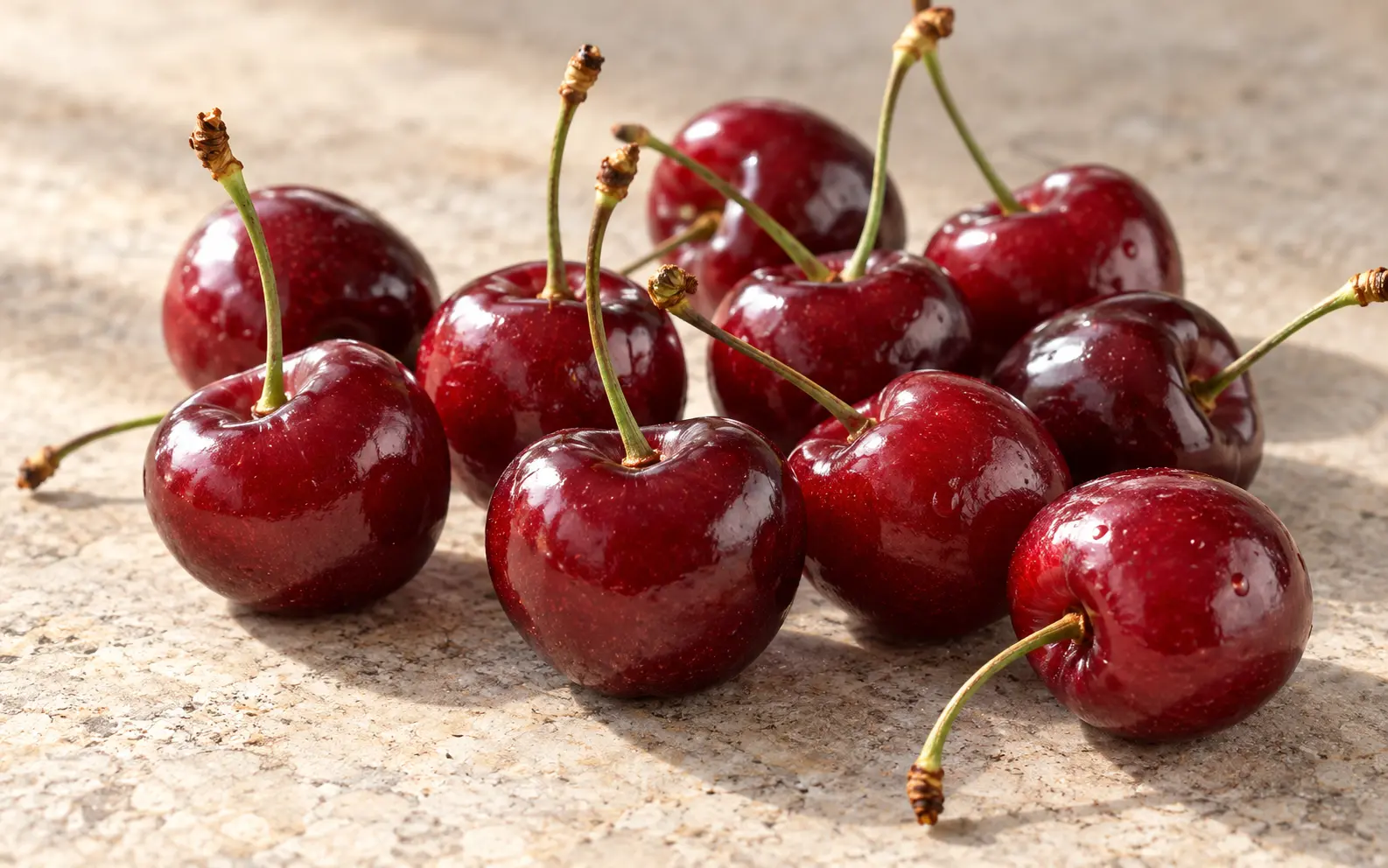
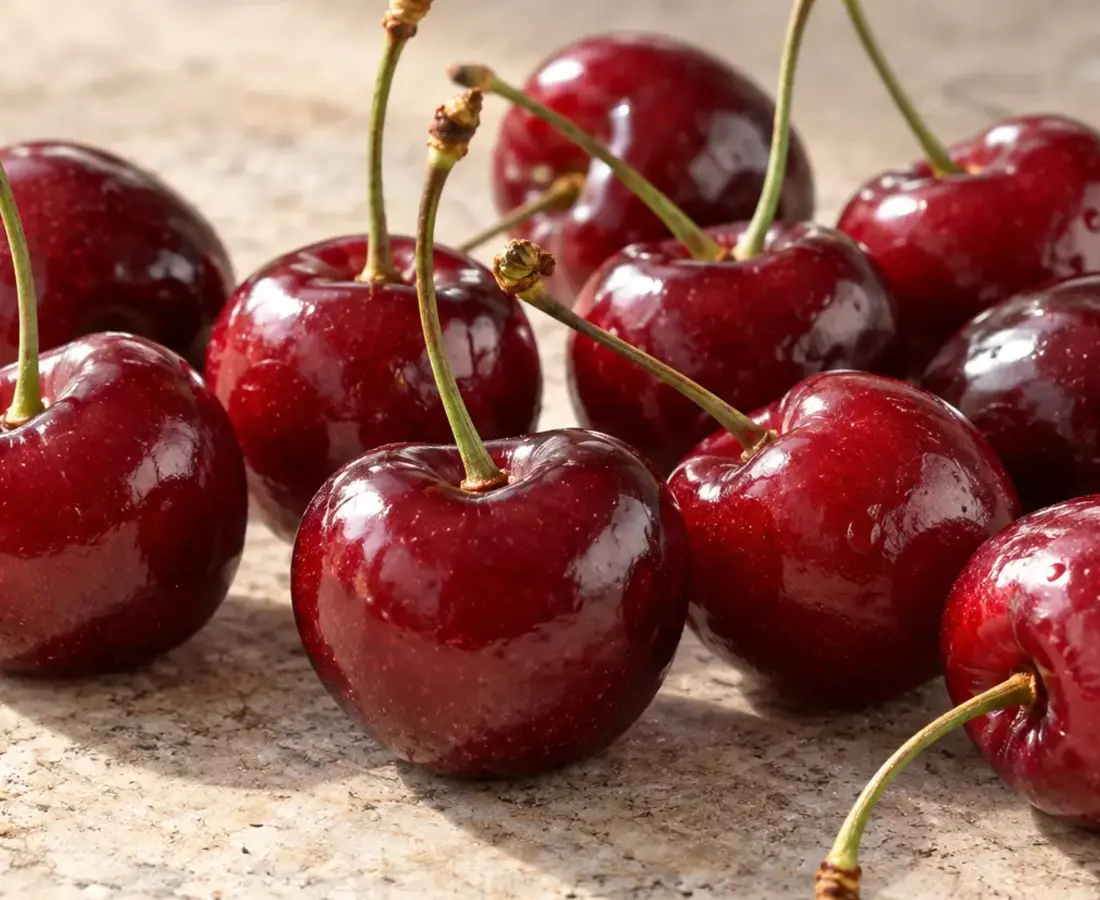
Editorial boundary: These AI-generated orientation images must not be used to identify wild foods, judge edibility, prove safe preparation, or diagnose spoilage. The verified safety-image panel and written guidance control where present.
Book readiness · Rewrite 02
Sweet cherries, raw. Scientific identity: Prunus avium (L.) L. Edible part: Fresh fruit flesh and skin; stone, kernel, stems, leaves, and bark are excluded. Exact source form: Cherries, sweet, raw, corresponding to USDA FoodData Central FDC 171719.
Question: What happens if someone accidentally swallows a cherry pit?
Repeated experience: Human Q&A repeatedly separates swallowing one intact pit from chewing or crushing pits, but commenters often invent precise toxic-dose numbers that are not reliable.
Poison Control states that small accidental ingestion of intact cherry pits generally does not cause harm, while crushing or chewing can release cyanide-producing compounds; pits should be removed before blending.
Risk depends on whether pits are intact, the number involved, age and symptoms. Crowd reassurance must not replace Poison Control for crushed pits, multiple pits or symptoms.
Exclude or qualify: Do not merge this chapter with: Sour cherries, named cultivars, canned, frozen or dried fruit, juice, preserves, pits or kernels, extracts, supplements, and finished foods. Remove or qualify medical-treatment, universal-safety, cross-species, cross-part, cross-product, and cross-preparation claims unless an exact source is reviewed for that wording.
| Layer | Disposition | Sources |
|---|---|---|
| Identity And Form | supported for bounded scope | [1] [2] [3] |
| Human Experience | experience documented not generalized | [4] |
| Authoritative Control | supported control | [3] |
| Supported Conclusion | supported with stated limits | [4] [3] |
| Safety And Limitations | required boundary | [1] [2] [3] |
Review status: This controlled rewrite uses the adjudicated identity, food-form, human-experience, authoritative-control, conclusion, and safety fields. It replaces broader legacy prose for this chapter layer but does not constitute final specialist or publication approval.
Final gate · Approval 01
Status: Approved for book assembly with required safety box
Approved for informational book assembly only with the authoritative safety-and-limitations box retained beside the chapter text.
Specialist-review flags: None
Safety-box triggers: choking, cyan, kernel, pit, poison, raw
Review scope: Final source-completeness, structure, exclusion, and risk-triage review for book assembly. This is not a claim that an external specialist reviewed the chapter.
Book placement · Volume 2
Chapter 7 in The Food Glossary: Evidence Edition — Volume 2. The authoritative safety box is mandatory in every edition.
Corrected USDA food/form panel · other claims unreviewed
raw sweet cherry; not sour cherry or pitanga. Other chapter claims unverified. The earlier mismatched or broader nutrient assignment is not used here. This panel describes only the named food and preparation, not every food sold under the glossary heading. A nutrient record does not establish raw-consumption safety.
This matched panel describes sweet cherries, raw. Sour cherries, canned fruit, dried cherries, juice, preserves, pie filling, and cultivar-specific products require separate records.
USDA FoodData Central: sweet cherries, raw · FDA: produce safety
| Energy | 63 kcal |
|---|---|
| Protein | 1.06 g |
| Fat | 0.2 g |
| Carbohydrate | 16 g |
| Fiber | 2.1 g |
| Total sugars | 12.8 g |
| Potassium | 222 mg |
USDA FoodData Central FDC 171719 · SR Legacy (final release, April 2018). Values describe only this named form, not all products or varieties.
Human experience evidence · Batch 07
Question: What happens if someone accidentally swallows a cherry pit?
Human Q&A repeatedly separates swallowing one intact pit from chewing or crushing pits, but commenters often invent precise toxic-dose numbers that are not reliable.
Poison Control states that small accidental ingestion of intact cherry pits generally does not cause harm, while crushing or chewing can release cyanide-producing compounds; pits should be removed before blending.
Risk depends on whether pits are intact, the number involved, age and symptoms. Crowd reassurance must not replace Poison Control for crushed pits, multiple pits or symptoms.
Publish the intact-versus-crushed distinction, choking precautions and U.S. Poison Control contact guidance; never present a universal lethal count.
Reddit NoStupidQuestions
Finding: People repeatedly ask about accidental intact-pit ingestion and propose unsupported antidotes or precise toxic counts.
Supported conclusion: Captures the anxiety and misinformation pattern the page must answer.
Limitations: Crowd dose claims and home-treatment advice are unreliable.
Evidence strength: Risk-question signal
Safety/current gate: Yes
National Capital Poison Center
Finding: Poison Control states that small unintentional ingestions of intact pits generally do not cause harm, while chewing or crushing can release cyanide-producing chemicals.
Supported conclusion: Supports a clear mechanism-based boundary and escalation route.
Limitations: Amygdalin content varies; the source does not provide a universal safe or lethal count.
Evidence strength: Clinical poison-control guidance
Safety/current gate: Yes
These 21 links are organized by a matching whole-food name. Prepared products and ingredients have separate composition profiles. Confirm the identity and form on each page; a similar name alone is not proof.
Nutrition for raw sweet cherry; not sour cherry or pitanga. USDA record: Cherries, sweet, raw.
| Nutrient | Amount |
|---|---|
| Energy | 63 kcal |
| Protein | 1.06 g |
| Fat | 0.2 g |
| Carbohydrate | 16 g |
| Fiber | 2.1 g |
| Calcium | 13 mg |
| Iron | 0.36 mg |
| Magnesium | 11 mg |
| Phosphorus | 21 mg |
| Potassium | 222 mg |
| Sodium | 0 mg |
| Zinc | 0.07 mg |
| Vitamin A, RAE | 3 µg |
| Vitamin C | 7 mg |
| Folate, total | 4 µg |
USDA FoodData Central FDC 171719, SR Legacy (April 2018).
Identity, preparation safety, growing, preservation, and health claims are not yet approved. No field-use or canning guidance is established here.