Tree nut · Juglandaceae
Butternuts
Juglans cinerea
The elongated, hard-shelled nut of the North American butternut tree—not butternut squash.
Core Edibles · Volume One
01
Meet the food
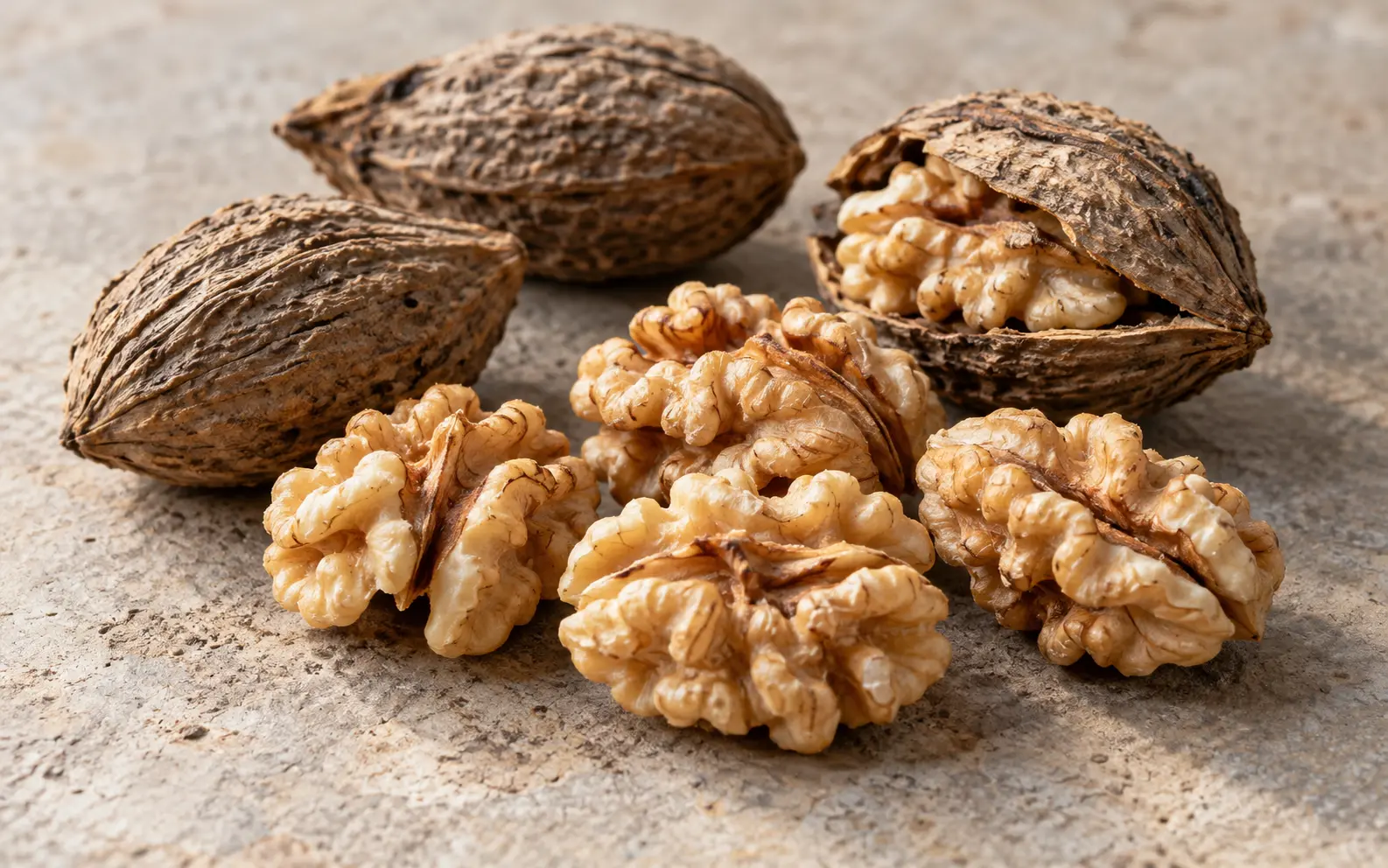
Butternut kernels, dried. Scientific identity: Juglans cinerea L. Edible part: Dried nut kernel; shell and husk are excluded. Exact source form: Nuts, butternuts, dried, corresponding to USDA FoodData Central FDC 170570.
The elongated, hard-shelled nut of the North American butternut tree—not butternut squash.
- Common name
- Butternuts
- Scientific name
- Juglans cinerea
- Family
- Juglandaceae
- Edition
- Core Edibles
- Flavor
- Sweet · rich · walnut-like
- Texture
- Oily · crisp
- Season
- Fall
- Best storage
- Dry · cold for longevity
- Great for
- Snack · bake · grind
- Know this
- Tree-nut allergen; wild identification required
02
Pairings
- Maple
- Apple
- Oats
- Cinnamon
- Cranberry
- Cacao
03
Safety & special considerations
Tree-nut allergen; wild identification required
Safety & special considerations Butternut is a major tree-nut allergy concern and is not squash. Wild trees can hybridize; do not eat unidentified nuts, and follow local conservation and harvest rules.
04
Taste, choose & buy
Use correctly identified, sound nuts without mold, insect damage, rancid odor, or blackened kernels.
05
Nutrition
Exact food form · Per 100 g
Nuts, butternuts, dried
| Nutrient | Per 100 g |
|---|---|
| Energy | 612 kcal |
| Carbohydrate | 12 g |
| Protein | 24.9 g |
| Fat | 57 g |
| Fiber | 4.7 g |
| Total sugars | n.a. |
USDA FoodData Central · per 100 g. Typical eating portions may be much smaller, especially for spices.
Exact chapter values; per 100 g; no derived calculations; unavailable values remain n.a.
06
Store & preserve
- 1
Dry · cold for longevity
Cure nuts dry, then keep shelled kernels airtight in the refrigerator or freezer.
- 2
Before using
Discard food with mold, pests, leaking decay, or an unmistakably off odor.
07
At a glance
- Flavor
- Sweet · rich · walnut-like
- Texture
- Oily · crisp
- Uses
- Snack · bake · grind
- Storage
- Dry · cold for longevity
- Safety
- Tree-nut allergen; wild identification required
- Nutrition form
- Nuts, butternuts, dried
08
Grow: start to harvest
This is a large native tree, not squash. Butternut canker threatens the species, so source seed legally and never move diseased material.
- START WITH
- Fresh, sound butternut nuts from a correctly identified Juglans cinerea tree
- CLIMATE
- Cold-temperate; roughly zones 3–7
- LIGHT
- Full sun
- SOIL
- Deep, fertile, moist but well-drained soil
- 1
Start it
Keep nuts in their shells. Refrigerate in barely moist material for 90–120 days, or plant 2–3 inches deep outdoors in fall under rodent-proof mesh.
- 2
Give it room
Transplant while young and allow 40–60 feet from buildings and other canopy trees.
- 3
Water correctly
Water deeply during dry weeks for the first 2–3 years; mulch without touching the trunk.
- 4
Care for it
Protect from rodents and deer. Do not prune in spring when sap flows heavily; remove and report cankered branches according to local guidance.
- 5
Harvest
Collect mature nuts after husks yellow-brown and begin dropping. Wear gloves, remove husks, wash, and cure nuts dry before cracking.
Seed-grown trees may need 7–20 years to produce nuts.
Collect mature nuts after husks yellow-brown and begin dropping. Wear gloves, remove husks, wash, and cure nuts dry before cracking.
09
Prepare & cook
- 1
Confirm tree identity
Match the method to the exact food form and intended dish.
- 2
Remove husk with gloves
Match the method to the exact food form and intended dish.
- 3
Dry nuts in shell
Match the method to the exact food form and intended dish.
- 4
Crack and inspect kernels
Match the method to the exact food form and intended dish.
Sources
- plants.ces.ncsu.eduhttps://plants.ces.ncsu.edu/plants/juglans-cinerea/
- fdc.nal.usda.govhttps://fdc.nal.usda.gov/food-details/170570/nutrients
- fda.govhttps://www.fda.gov/food/nutrition-food-labeling-and-critical-foods/food-allergies
- reddit.comhttps://www.reddit.com/r/foraging/comments/p6so6r/finally_found_butter_nut_white_walnut_juglans/
core-edibles-2026.1 · butternuts