Fruit · Musaceae
Banana
Musa spp. and hybrids
A soft, portable tropical fruit whose starch becomes sweeter and more aromatic as it ripens.
Core Edibles · Volume One
01
Meet the food
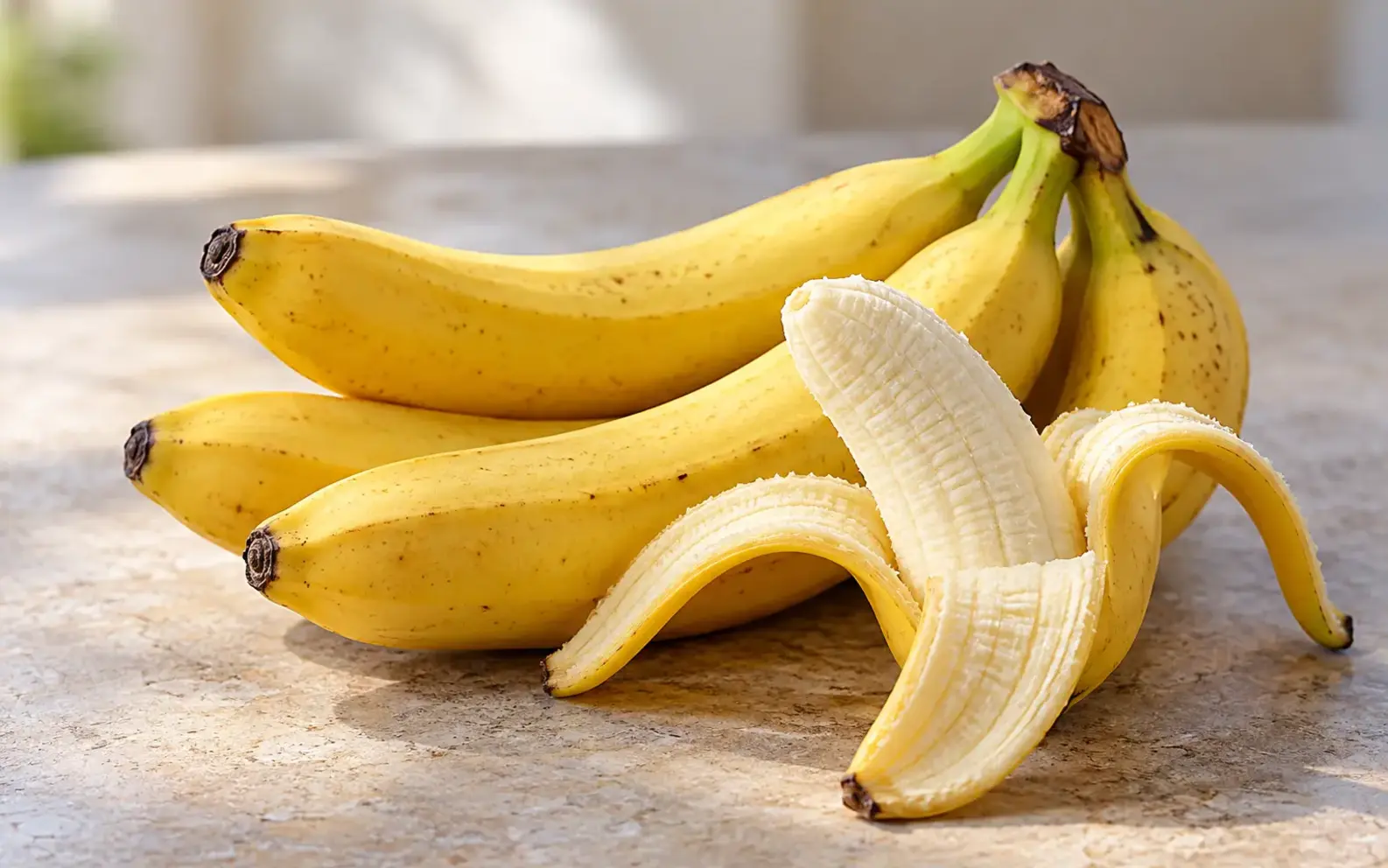
Banana fruit, raw. Scientific identity: Musa species and cultivated hybrids; the USDA record does not state a variety or genomic group. Edible part: Fresh fruit pulp; peel, flowers, leaves, pseudostem, and other plant parts are excluded. Exact source form: Bananas, raw, corresponding to USDA FoodData Central FDC 173944.
A soft, portable tropical fruit whose starch becomes sweeter and more aromatic as it ripens.
- Common name
- Banana
- Scientific name
- Musa spp. and hybrids
- Family
- Musaceae
- Edition
- Core Edibles
- Flavor
- Sweet · floral · mild
- Texture
- Firm green · creamy ripe
- Season
- Year-round tropical crop
- Best storage
- Room temperature
- Great for
- Fresh · bake · freeze
- Know this
- Most edible bananas cannot be grown from their tiny undeveloped seeds
02
Pairings
- Oats
- Peanut
- Cacao
- Cinnamon
- Coconut
- Lime
03
Safety & special considerations
Most edible bananas cannot be grown from their tiny undeveloped seeds
Safety & special considerations Ripeness changes starch and sweetness, but color does not create a universal digestive treatment. Discard moldy, leaking, fermented-smelling fruit.
04
Taste, choose & buy
Choose color by timing: green for later, yellow for soon, and spotted for very sweet baking fruit.
05
Nutrition
Exact food form · Per 100 g
Bananas, raw
| Nutrient | Per 100 g |
|---|---|
| Energy | 89 kcal |
| Carbohydrate | 22.8 g |
| Protein | 1.09 g |
| Fat | 0.33 g |
| Fiber | 2.6 g |
| Total sugars | 12.2 g |
USDA FoodData Central · per 100 g. Typical eating portions may be much smaller, especially for spices.
Exact chapter values; per 100 g; no derived calculations; unavailable values remain n.a.
06
Store & preserve
- 1
Room temperature
Keep at room temperature until ripe; refrigerate ripe fruit to slow softening, though the peel will darken.
- 2
Before using
Discard food with mold, pests, leaking decay, or an unmistakably off odor.
07
At a glance
- Flavor
- Sweet · floral · mild
- Texture
- Firm green · creamy ripe
- Uses
- Fresh · bake · freeze
- Storage
- Room temperature
- Safety
- Most edible bananas cannot be grown from their tiny undeveloped seeds
- Nutrition form
- Bananas, raw
08
Grow: start to harvest
Most edible bananas are seedless and cannot be started from the tiny dark specks in grocery fruit. The practical starting piece is living plant material.
- START WITH
- A disease-free banana sucker, corm division, or tissue-culture plant
- CLIMATE
- Warm, humid, frost-free; roughly zones 9b–11, or containers moved indoors
- LIGHT
- 6–8+ hours of direct sun
- SOIL
- Rich, deep, well-drained soil that stays moist
- 1
Start it
Plant the corm or rooted plant at its former depth after weather is consistently above 60°F. Firm soil and water thoroughly.
- 2
Give it room
Allow 8–12 feet per mat in ground. Keep one fruiting stem, one follower, and one young sucker; remove extras.
- 3
Water correctly
Provide steady deep moisture, often 1–2 inches weekly in heat, without waterlogging roots.
- 4
Care for it
Mulch heavily, feed during active growth, shelter from wind, and remove dead leaves. Protect or move containers before frost.
- 5
Harvest
Cut the bunch when fingers are plump, ridges round off, and the first fruit begins changing color. Hang the bunch in shade to finish ripening.
In sustained warmth, a new plant often fruits in about 12–18 months.
Cut the bunch when fingers are plump, ridges round off, and the first fruit begins changing color. Hang the bunch in shade to finish ripening.
09
Prepare & cook
- 1
Peel
Match the method to the exact food form and intended dish.
- 2
Remove bruised or spoiled flesh
Match the method to the exact food form and intended dish.
- 3
Slice or mash
Match the method to the exact food form and intended dish.
- 4
Freeze ripe pieces for blending
Match the method to the exact food form and intended dish.
Sources
- powo.science.kew.orghttps://powo.science.kew.org/results?q=Musa
- fdc.nal.usda.govhttps://fdc.nal.usda.gov/food-details/173944/nutrients
- postharvest.ucdavis.eduhttps://postharvest.ucdavis.edu/produce-facts-sheets/banana
- skeptics.stackexchange.comhttps://skeptics.stackexchange.com/questions/13907/does-the-ripeness-of-a-banana-have-any-effect-on-causing-constipation
- pubmed.ncbi.nlm.nih.govhttps://pubmed.ncbi.nlm.nih.gov/29309737/
core-edibles-2026.1 · banana