Fruit · Rosaceae
Apricot
Prunus armeniaca
A fragrant stone fruit balancing honeyed sweetness, floral aroma, and gentle acidity.
Core Edibles · Volume One
01
Meet the food
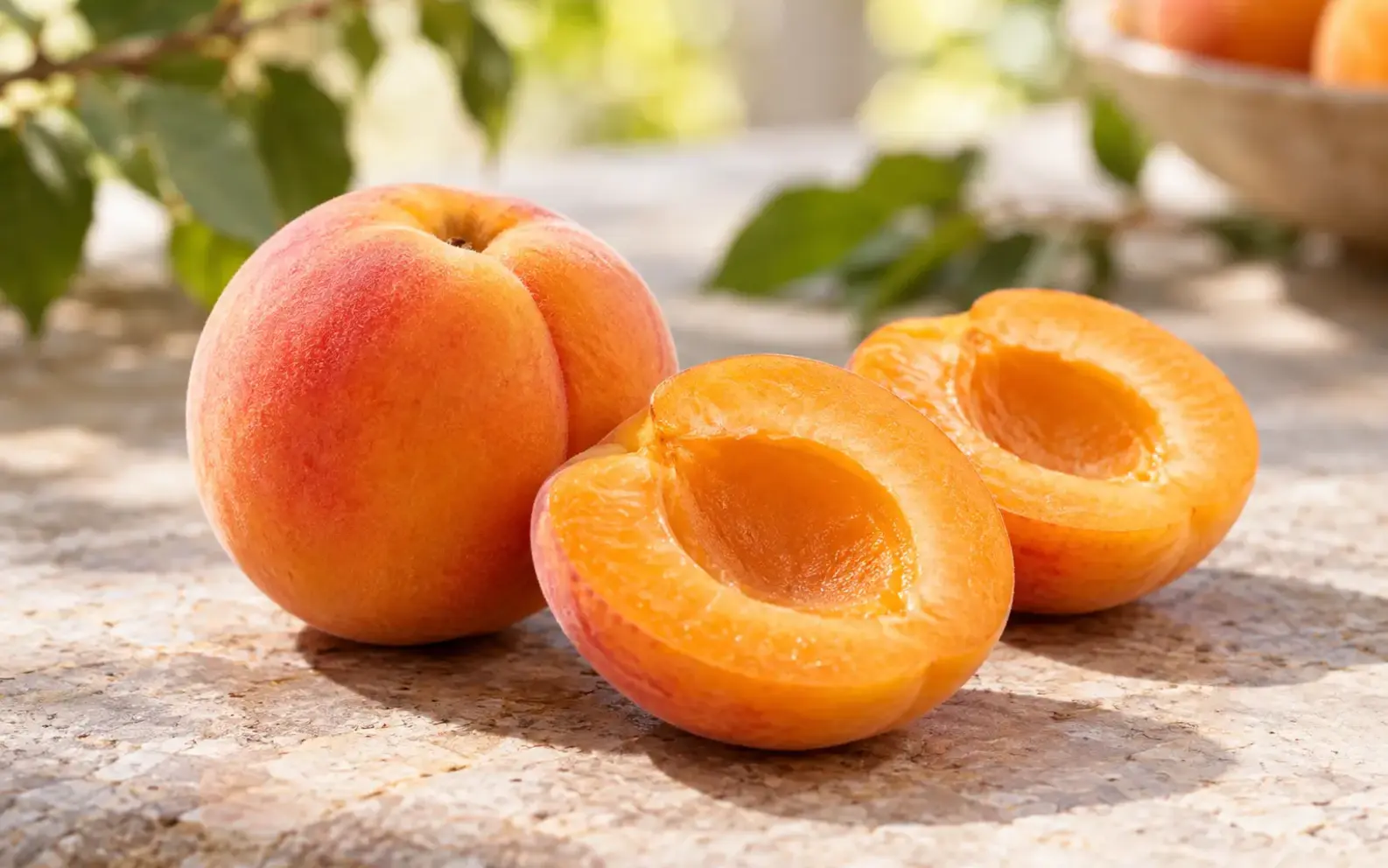
Apricot fruit, raw. Scientific identity: Prunus armeniaca L. Edible part: Fresh fruit flesh and skin; the stone and kernel are excluded. Exact source form: Raw apricots corresponding to USDA FoodData Central FDC 171697.
A fragrant stone fruit balancing honeyed sweetness, floral aroma, and gentle acidity.
- Common name
- Apricot
- Scientific name
- Prunus armeniaca
- Family
- Rosaceae
- Edition
- Core Edibles
- Flavor
- Sweet · floral · lightly tart
- Texture
- Tender · juicy
- Season
- Late spring–summer
- Best storage
- Ripen out · refrigerate ripe
- Great for
- Fresh · roast · preserve
- Know this
- Do not eat the kernel inside the pit
02
Pairings
- Almonds
- Pistachios
- Vanilla
- Ginger
- Rosemary
- Lemon
03
Safety & special considerations
Do not eat the kernel inside the pit
Safety & special considerations The edible fruit does not make the kernel safe. Apricot kernels contain amygdalin and can release cyanide; keep the pit and kernel out of food.
04
Taste, choose & buy
Choose fragrant fruit that yields slightly without feeling mushy or leaking.
05
Nutrition
Exact food form · Per 100 g
Apricots, raw
| Nutrient | Per 100 g |
|---|---|
| Energy | 48 kcal |
| Carbohydrate | 11.1 g |
| Protein | 1.4 g |
| Fat | 0.39 g |
| Fiber | 2 g |
| Total sugars | 9.24 g |
USDA FoodData Central · per 100 g. Typical eating portions may be much smaller, especially for spices.
Exact chapter values; per 100 g; no derived calculations; unavailable values remain n.a.
06
Store & preserve
- 1
Ripen out · refrigerate ripe
Ripen firm fruit at room temperature; refrigerate ripe fruit and use promptly. Freeze pitted halves for cooked uses.
- 2
Before using
Discard food with mold, pests, leaking decay, or an unmistakably off odor.
07
At a glance
- Flavor
- Sweet · floral · lightly tart
- Texture
- Tender · juicy
- Uses
- Fresh · roast · preserve
- Storage
- Ripen out · refrigerate ripe
- Safety
- Do not eat the kernel inside the pit
- Nutrition form
- Apricots, raw
08
Grow: start to harvest
The seed can produce a tree, but it will not reliably reproduce the parent fruit. Never eat the kernel inside the stone; this step is for planting only.
- START WITH
- The intact stone from a ripe apricot
- CLIMATE
- Cold enough for winter dormancy but with low risk of frost during very early spring bloom; often zones 5–8, depending on the seedling.
- LIGHT
- 8+ hours of direct sun
- SOIL
- Deep, well-drained soil; avoid frost pockets and standing water
- 1
Start it
Clean and dry the stone. Place it in barely moist medium in a ventilated bag in the refrigerator for 8–12 weeks. Check weekly. When it begins to split or root, plant 1–2 inches deep.
- 2
Give it room
Pot the seedling deeply for its first season or plant it where it can have 15–20 feet of open space.
- 3
Water correctly
Keep young roots evenly moist, then water deeply when the upper soil dries. Reduce watering as fruit ripens to limit splitting.
- 4
Care for it
Train an open, well-spaced branch framework and remove dead or crossing branches. Protect blossoms when a late freeze is forecast.
- 5
Harvest
Pick when fruit is fully colored, fragrant, slightly soft, and releases with a gentle twist. Discard the stones; do not eat their kernels.
A seedling often needs about 3–7 years to fruit, and the fruit quality is unpredictable.
Pick when fruit is fully colored, fragrant, slightly soft, and releases with a gentle twist. Discard the stones; do not eat their kernels.
09
Prepare & cook
- 1
Rinse
Match the method to the exact food form and intended dish.
- 2
Cut along the seam
Match the method to the exact food form and intended dish.
- 3
Twist halves apart
Match the method to the exact food form and intended dish.
- 4
Remove and discard the stone
Match the method to the exact food form and intended dish.
Sources
- powo.science.kew.orghttps://powo.science.kew.org/taxon/urn%3Alsid%3Aipni.org%3Anames%3A729575-1
- fdc.nal.usda.govhttps://fdc.nal.usda.gov/food-details/171697/nutrients
- postharvest.ucdavis.eduhttps://postharvest.ucdavis.edu/produce-facts-sheets/apricot
- fda.govhttps://www.fda.gov/food/alerts-advisories-safety-information/fda-issues-warning-about-toxic-amygdalin-found-apricot-seeds
- reddit.comhttps://www.reddit.com/r/medical/comments/1dtl2jf/i_just_ate_a_bunch_of_bitter_apricot_kernels_will/
core-edibles-2026.1 · apricot