Spice · Apiaceae
Anise Seeds
Pimpinella anisum
A small aromatic seed with a clean licorice-like flavor used in breads, sweets, teas, and savory spice blends.
Core Edibles · Volume One
01
Meet the food
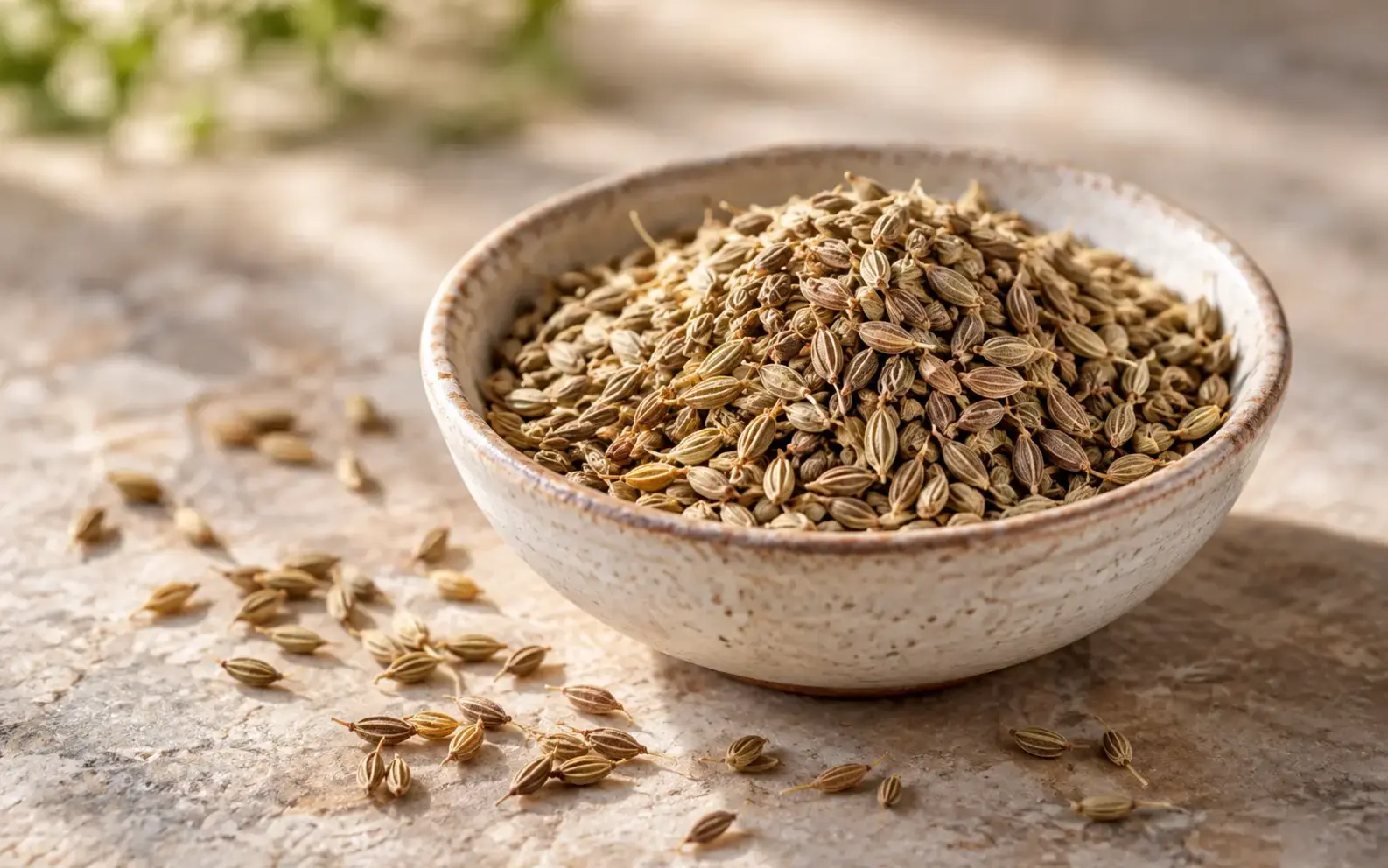
Anise spice from Pimpinella anisum. Scientific identity: Pimpinella anisum L. Edible part: Dried fruit commonly sold as anise seed. Exact source form: Anise seed spice corresponding to the retained USDA FoodData Central record.
A small aromatic seed with a clean licorice-like flavor used in breads, sweets, teas, and savory spice blends.
- Common name
- Anise Seeds
- Scientific name
- Pimpinella anisum
- Family
- Apiaceae
- Edition
- Core Edibles
- Flavor
- Licorice-like · sweet · aromatic
- Texture
- Small · crisp seed
- Season
- Dried pantry spice
- Best storage
- Airtight · dark · dry
- Great for
- Bread · tea · baking
- Know this
- Not the same plant as star anise
02
Pairings
- Fennel
- Citrus
- Cinnamon
- Cardamom
- Fig
- Carrot
03
Safety & special considerations
Not the same plant as star anise
Safety & special considerations Anise seed and star anise are botanically different. Do not substitute unidentified star-shaped pods or essential oil for culinary anise seed.
04
Taste, choose & buy
The seeds should smell strongly aromatic when rubbed; avoid dusty, damp, or weak-smelling products.
05
Nutrition
Exact food form · Per 100 g
Spices, anise seed
| Nutrient | Per 100 g |
|---|---|
| Energy | 337 kcal |
| Carbohydrate | 50 g |
| Protein | 17.6 g |
| Fat | 15.9 g |
| Fiber | 14.6 g |
| Total sugars | n.a. |
USDA FoodData Central · per 100 g. Typical eating portions may be much smaller, especially for spices.
Exact chapter values; per 100 g; no derived calculations; unavailable values remain n.a.
06
Store & preserve
- 1
Airtight · dark · dry
Keep airtight away from heat and light. Whole seed holds aroma longer than pre-ground spice.
- 2
Before using
Discard food with mold, pests, leaking decay, or an unmistakably off odor.
07
At a glance
- Flavor
- Licorice-like · sweet · aromatic
- Texture
- Small · crisp seed
- Uses
- Bread · tea · baking
- Storage
- Airtight · dark · dry
- Safety
- Not the same plant as star anise
- Nutrition form
- Spices, anise seed
08
Grow: start to harvest
Anise is an annual with a taproot and dislikes transplanting. It is not star anise and is not the same plant as fennel.
- START WITH
- Culinary anise seed sold for planting (Pimpinella anisum)
- CLIMATE
- A sunny season with about 100–120 frost-free days
- LIGHT
- 8 hours of direct sun if possible
- SOIL
- Loose, well-drained soil with no standing water
- 1
Start it
Direct-sow after the last hard frost when soil is at least about 60°F. Plant 1/4 inch deep, 1–2 inches apart, and keep the top layer evenly moist until germination, usually in 1–3 weeks.
- 2
Give it room
Thin seedlings to 6–8 inches apart; leave about 18 inches between rows.
- 3
Water correctly
Water at soil level when the top inch dries. Avoid keeping foliage and ripening seed heads wet overnight.
- 4
Care for it
Weed carefully without disturbing the taproot. Support plants if exposed to strong wind.
- 5
Harvest
When most seed heads turn gray-brown, cut them before they shatter. Hang or lay them inside paper bags until fully dry, then rub out and sift the seeds.
Plan on roughly 100–120 days from sowing to dry seed.
When most seed heads turn gray-brown, cut them before they shatter. Hang or lay them inside paper bags until fully dry, then rub out and sift the seeds.
09
Prepare & cook
- 1
Crush just before use
Match the method to the exact food form and intended dish.
- 2
Toast gently
Match the method to the exact food form and intended dish.
- 3
Steep and strain
Match the method to the exact food form and intended dish.
- 4
Use whole in breads
Match the method to the exact food form and intended dish.
Sources
- powo.science.kew.orghttps://powo.science.kew.org/taxon/846658-1
- fdc.nal.usda.govhttps://fdc.nal.usda.gov/food-details/171316/nutrients
- reddit.comhttps://www.reddit.com/r/AskCulinary/comments/klrh43
- pubmed.ncbi.nlm.nih.govhttps://pubmed.ncbi.nlm.nih.gov/36739890/
core-edibles-2026.1 · anise_seeds